
Emphasizes AI platform boosts employee engagement, cuts approval times
Serge Bulaev
AI-driven HR platforms may help boost employee engagement and reduce approval times by using features like algorithmic reminders, gamification, and real-time recognition. Analysts suggest these platforms reflect larger trends in proactive engagement and responsible AI use. Studies and reports indicate that tools such as chatbots and scheduling AI might lead to smoother interactions and less stress, though the benefits to decision-making accuracy are still modest. There are signs that some implementations may harm focus, suggesting a need for better tools to track both wellbeing and output. Future developments appear likely to focus on predicting burnout and offering more personalized learning, based on human motivators.
A human-centric AI platform boosts employee engagement, a key shift as HR teams adapt to hybrid work. By using algorithmic nudges, real-time recognition, and gamification, these tools help manage workload stress while sustaining motivation and cutting approval times. This approach aligns with emerging HR tech trends favoring proactive engagement and ethical AI oversight.
AI as a wellbeing companion
AI-driven platforms enhance engagement through features like gamification, real-time rewards, and automated wellness prompts. Simultaneously, they accelerate workflows by using intelligent automation to handle repetitive tasks like scheduling, significantly reducing administrative hours and freeing up managers for more strategic work.
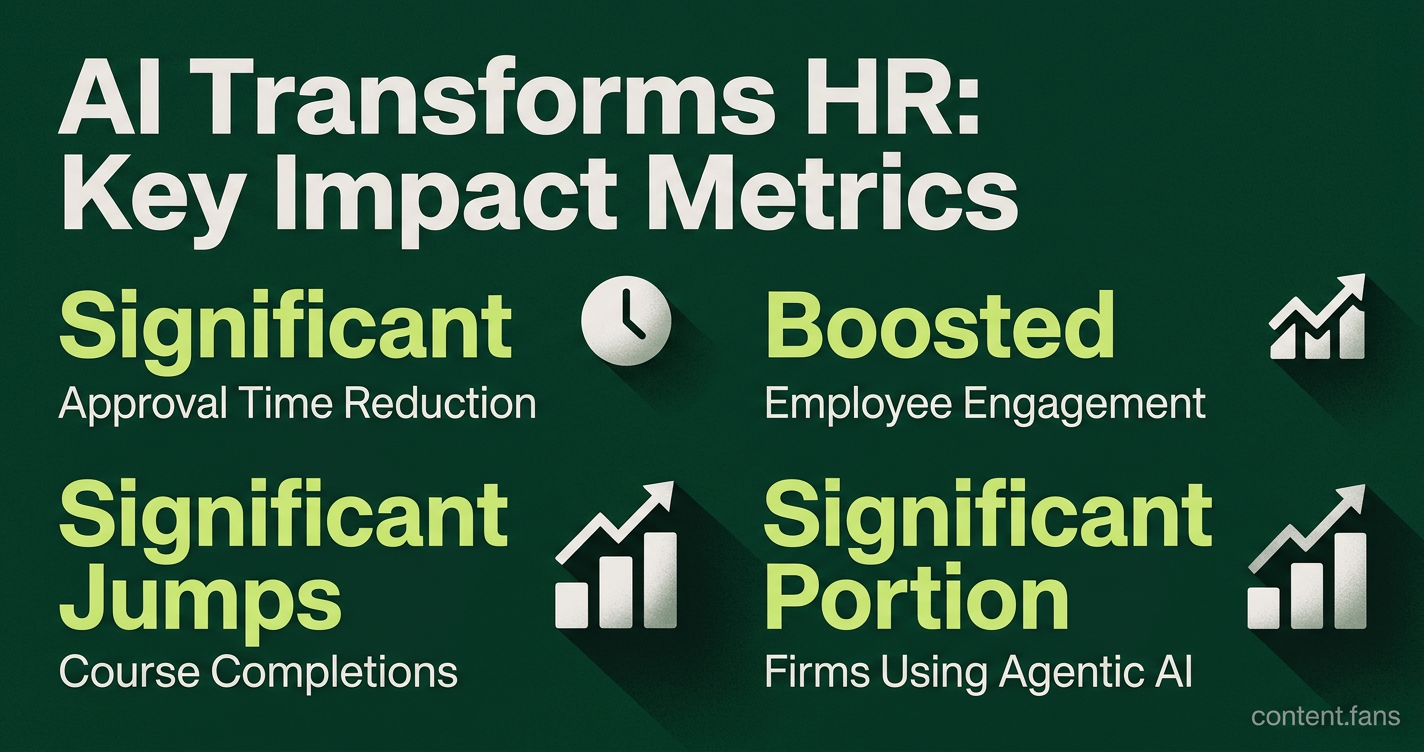
Delegating repetitive administrative tasks to AI can significantly reduce employee cognitive overload. Industry reports suggest this requires establishing clear psychological safety norms first. For example, AI scheduling tools have shown significant reductions in approval times while improving employee engagement scores, according to industry reports. Further data shows a significant portion of HR teams using chatbots see smoother employee interactions.
Gamification plus instant recognition
Gamification layers that include peer-to-peer points, badges, and leaderboards directly influence motivation. A large-scale study of 418 employees confirmed that gamified HRM positively impacts work engagement, partially mediated by intrinsic motivation, with positive moderation by gaming preference and POS. Surveys also show many employees using gamified training feel motivated, a sharp contrast to those who find traditional programs boring. Underscoring this, enterprise pilots have recorded significant jumps in course completions after implementing AI-driven gamification systems.
Human-centric design principles
Modern employee experience platforms are built on human-centric design principles, integrating sentiment analytics and wellbeing tools into a cohesive journey. According to market researchers at S&P Global, key pillars for this design include transparent algorithms with clear decision checkpoints, skills intelligence that maps capabilities over job titles, and flexible workflows designed to protect focus time. Current data from ADP shows a significant portion of large firms already use some form of agentic AI, with chief HR officers projecting substantial growth in the coming years, contingent on maintaining explicit human oversight.
Early risk signals
Despite the benefits, early deployments show potential risks, particularly regarding employee focus. HR Executive reports that average focus time has fallen to a three-year low, suggesting that some AI tools may fragment attention. Furthermore, gains in decision-making accuracy are modest, according to industry reports. These signals point to a critical need for dashboards that track wellbeing and productivity metrics together.
What comes next
Future developments in HR AI are expected to focus on predictive people analytics. Vendor roadmaps indicate a shift toward tools that can identify burnout risk and proactively recommend interventions like targeted time off or personalized micro-learning modules. Researchers at Deloitte anticipate that future learning journeys will be designed around core human motivators like curiosity and mastery, further cementing the industry's move toward an empathy-driven user experience.
How exactly does the platform use AI to raise employee engagement?
By blending real-time recognition, gamified nudges, and proactive wellbeing alerts, the AI engine keeps motivation high throughout the day. Instant micro-rewards (points, badges, shout-outs) arrive the moment an employee hits a goal, and studies show this timing can lift engagement scores by 79 % compared with traditional, delayed praise. At the same time, the system watches anonymized wellness data from wearables or self-check-ins and can surface a prompt to take a break, join a peer group, or talk to a coach before burnout sets in ^6.
What measurable speed gains can leaders expect in routine approvals?
Approval workflows that once dragged across inboxes now run through agentic AI that is tuned to HR policies. Early adopters have reported significant reductions in scheduling approval times while improving employee engagement scores, according to industry reports. Many HR leaders report substantial improvements in process efficiency after task-automation roll-outs.
Does gamification really improve retention?
Yes - and the numbers are hard to ignore. TalentLMS found that 83 % of employees in gamified training feel motivated versus only 61 % in non-gamified programs ^7. More importantly, 52 % of HR departments that added game mechanics saw better retention, and employees at these organizations are 69 % more likely to stay three or more years ^2.
How is human-centric design balanced with heavy automation?
The emerging design standard is "empathetic tech with guardrails". Agentic AI handles recurring tasks, yet every automated suggestion defaults to human review unless the employee opts for auto-approval. Transparent dashboards show why a decision was made, and HR retains the right to override. This co-governance approach is expected to drive significant growth in agentic AI adoption, but many CHROs still insist on human-AI collaboration for most workflows.
What safeguards are in place to protect employee wellbeing?
The platform enforces psychological safety first: participation in wellness tracking or gamified challenges is opt-in, data stays anonymized in aggregate dashboards, and managers receive alerts rather than raw numbers. Industry reports suggest AI coaching pilots show improved job satisfaction when employees retain control of what the system can see. To prevent the common pitfall of eroded focus time, focus blocks are auto-scheduled when AI detects gaps in uninterrupted work, keeping deep-work time intact ^6.