
CNN Sues Perplexity Over Paywalled Content, Citing Failed Negotiations
Serge Bulaev
CNN has sued Perplexity, an AI startup, claiming it copied and shared CNN's paywalled content without permission. CNN says Perplexity kept using its stories after failed talks, and that some AI answers may confuse users by showing CNN's logo. Perplexity argues it might be allowed to use facts this way under fair use rules, but it is not clear yet if the court will agree. This lawsuit comes as more publishers are challenging AI companies over content use, and the final decision could affect future deals and lawsuits. No trial date has been set yet.
CNN has sued Perplexity, an AI answer engine, over allegations that the startup systematically reproduced its paywalled content without permission. The federal lawsuit, filed in New York, claims Perplexity copied entire articles, images, and videos, undermining CNN's subscription model. This legal action marks a significant escalation in the battle between news organizations and AI developers over the use of copyrighted journalism to power generative AI tools.
What Are the Core Allegations in CNN's Lawsuit?
CNN alleges that Perplexity knowingly copied and distributed its protected journalism, including verbatim text from paywalled articles, after licensing negotiations failed. The lawsuit also claims Perplexity's use of CNN's logo misleads users into thinking a partnership exists, directly harming the network's brand and subscription business.
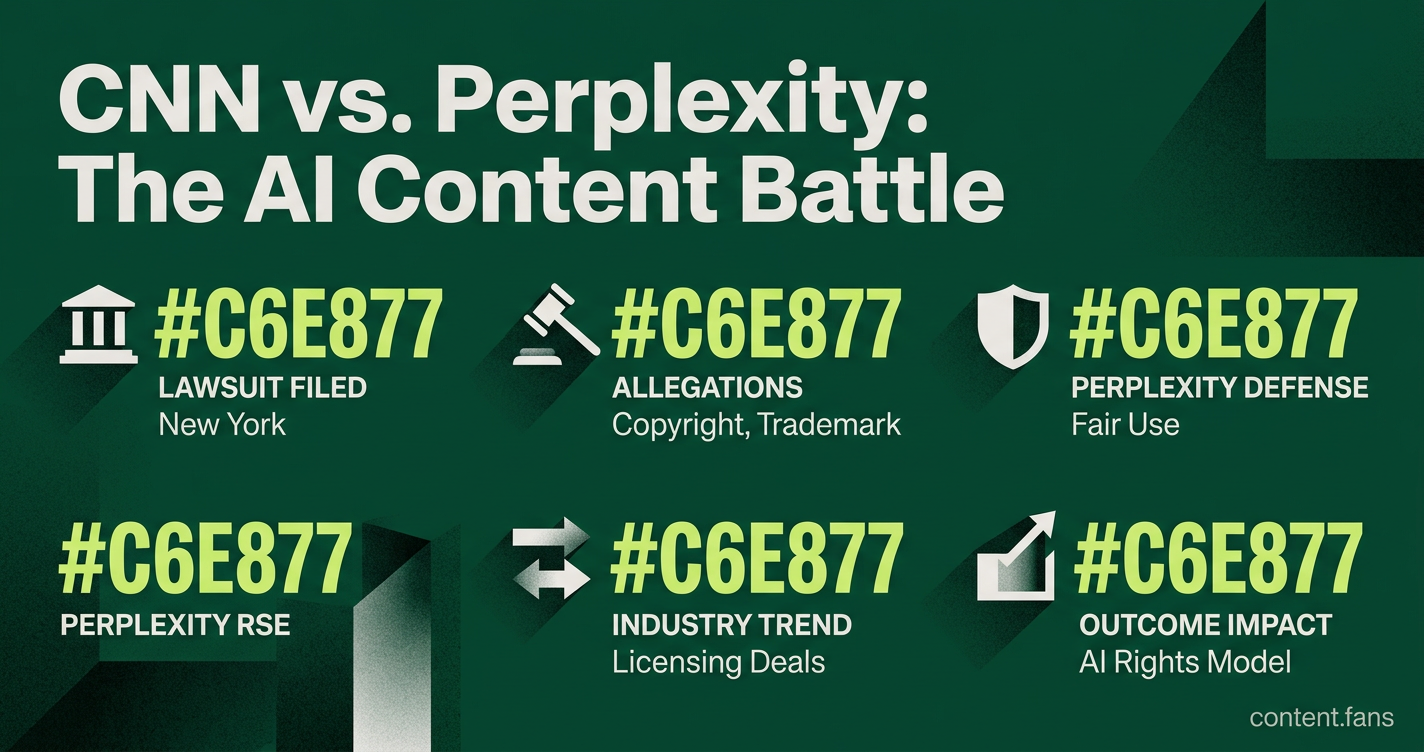
The complaint details how Perplexity allegedly continued to scrape CNN content even after licensing talks collapsed. A key point of contention is Perplexity's fair-use defense, which centers on the idea that it extracts uncopyrightable facts. However, CNN's suit counters that the AI tool reproduces substantial, expressive portions of articles, directly substituting for paid subscriptions and creating market harm.
The Fair Use Doctrine: A Looming Legal Battle
Legal experts predict the case will hinge on the four factors of fair use. As summarized by Reuters, CNN is pursuing claims of direct copyright infringement and trademark violations related to logo use. In response, Perplexity is likely to argue its product is "transformative," creating new summaries rather than just copying. The court's decision may depend on whether it views Perplexity's output as a new work or a simple substitute for the original.
A Wider Industry Conflict: Publishers vs. Big Tech
This lawsuit is not an isolated event. It joins a growing number of legal challenges from publishers against major AI companies like OpenAI, Meta, and Cohere. These cases collectively push for a future where AI developers must pay licensing fees for the content they use.
CNN's lawsuit notes that other publishers, including Gannett and Le Monde, have already secured licensing deals with Perplexity. According to industry reports, the network attempted to negotiate a similar deal before resorting to legal action, emphasizing that "there is no free option" for its journalism. The outcome could push the AI industry toward a rights-clearance model similar to music streaming, with formal systems for revenue sharing and content use.
While no trial date has been set, the case's initial stages will likely focus on procedural motions and discovery disputes. The resolution of this and similar lawsuits will fundamentally shape the financial and legal relationships between news organizations and the rapidly evolving AI industry.
What exactly is CNN accusing Perplexity of in the lawsuit?
CNN's complaint, filed on May 28, 2026 in the Southern District of New York, says Perplexity copied, stored and redistributed CNN journalism without permission.
Key points:
- Paywalled content was allegedly surfaced verbatim or nearly verbatim, undermining CNN's subscription model.
- Trademark confusion: Perplexity answers sometimes carry CNN logos or branding, giving users the false impression that CNN endorses the product.
- Market substitution: CNN argues that a Perplexity answer can replace a visit to CNN.com, threatening both traffic and licensing revenue.
How is Perplexity defending itself?
Perplexity's public response was blunt: "You can't copyright facts."
Behind that headline:
- Fair-use claim: Perplexity will argue its output is transformative because it synthesizes and answers questions rather than republishes full articles.
- Fact vs. expression: The company emphasizes that news facts remain free, only original expression is protected.
- Public interest: Perplexity describes itself as a search and summary tool that helps users find information more efficiently.
The court will now decide whether these defenses outweigh CNN's evidence of verbatim copies and paywall circumvention.
Why did negotiations break down before the lawsuit?
According to CNN, formal talks began and ended without agreement.
Factors behind the deadlock:
- Pricing: CNN asked for licensing fees that Perplexity viewed as too high.
- Scope: CNN wanted the deal to cover both training data and real-time retrieval; Perplexity favored narrower terms.
- Precedent concerns: Both sides knew any concession could influence future negotiations with other publishers.
CNN's public statement frames the failure in simple terms: "There is no free option."
How does this case fit the wider publisher-AI landscape?
CNN v. Perplexity is one front in a significant series of lawsuits involving publishers and AI companies.
Snapshot of parallel actions:
- OpenAI: A multidistrict litigation in SDNY consolidates more than a dozen publisher cases (status: discovery and partial dismissals).
- Meta: A class action by Elsevier, Hachette and others alleges Llama training used copyrighted works.
- Cohere: Multiple publishers, including The Atlantic and Forbes, are pursuing claims in an ongoing suit filed Feb. 13, 2025.
Together these cases test how much licensing, rather than open-web scraping, becomes the default cost for AI firms.
What are the likely long-term effects for AI news products?
Industry analysts see four near-term shifts triggered by CNN's suit:
1. Licensing becomes a line-item budget: AI companies may negotiate blanket agreements with major publishers instead of risk court-ordered damages.
2. Price of instant answers rises: Expect tiered AI products where premium tiers include licensed news and free tiers exclude it.
3. Rights infrastructure: Start-ups may adopt systems similar to music royalties - databases of cleared content, usage logs and micropayments.
4. Market consolidation: Only well-funded companies will absorb licensing costs, accelerating M&A activity among smaller AI search firms.