
CapCut, Canva, Notion AI integrate to save creators 3 hours weekly
Serge Bulaev
CapCut, Canva, and Notion AI are popular tools that may help online creators save up to three hours each week by making video editing, design, and planning faster and easier. Surveys suggest that a majority of creators and marketers now use these AI tools regularly, and adoption rates appear to be rising quickly. Many creators say these apps help them get started with automated edits, keep branding consistent, and organize their work in one place. Even with these tools, creators still need to review and adjust the final results. Overall, automation seems to have become a normal and expected part of creating online content by 2026.

Integrating CapCut, Canva, and Notion AI can save creators significant time weekly, a claim supported by recent surveys showing a major shift in content production. Freelance creators and marketing teams alike are adopting this AI-powered stack to streamline their workflows. Industry reports indicate that a growing number of online creators now begin their process with automated edits before applying manual refinements. This guide explores how these three essential tools are reshaping the creator economy.
Adoption stats underscore a creative shift
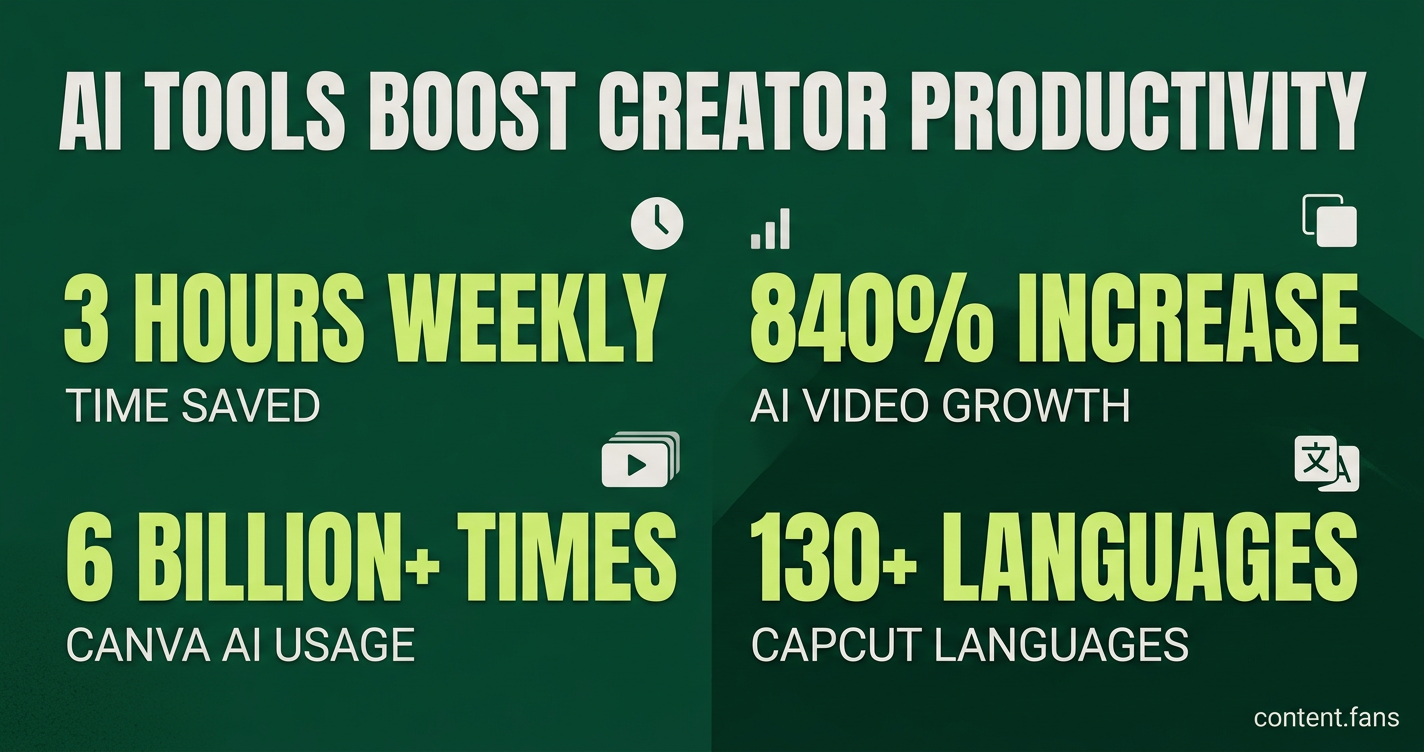
Recent adoption statistics confirm a significant creative shift. Platform data shows a significant portion of freelance creators use an AI video editor weekly, with many users saving considerable time on tasks like trimming and captioning. This trend extends to marketing, where a substantial number of social media teams now incorporate AI video into their strategies. This rapid adoption is fueled by a staggering 840% increase in global AI video generation from January 2024 to January 2026, driven by accessible, cloud-based tools for platforms like TikTok and Reels.
By integrating CapCut for automated video editing, Canva for rapid, on-brand graphic design, and Notion AI for centralized planning and research, creators can significantly reduce manual effort. This trio automates repetitive tasks, streamlines asset creation, and organizes the entire content lifecycle, minimizing context switching and rework.
CapCut, Canva and Notion AI: the everyday stack
CapCut for Video Editing: CapCut dominates mobile-first video production with powerful AI features. Key automations include auto-captions in over 130 languages, background removal, automatic beat syncing, script-to-video generation, and 4K upscaling. Its generous free tier, which offers watermark-free 1080p exports, makes it a go-to for emerging creators.
Canva for Design: Canva streamlines graphic design with its Magic Studio, an AI suite used over six billion times. It combines Magic Write for copy, Magic Design for automated layouts, and text-to-image tools. Teams rely on Canva's Brand Kit to maintain consistent branding across all visual assets.
Notion AI for Planning: Notion AI integrates planning directly into the creative workspace. Its AI assistant can search project archives, summarize meeting notes, and distill long interviews into key points. This centralization reduces the need to switch between multiple applications, keeping teams focused.
The Integrated AI Workflow in Action
A modern content creator's workflow demonstrates the power of this integrated stack. The process often starts in Notion AI to draft a script, followed by generating graphics in Canva, and concludes with editing a short-form video in CapCut. This streamlined process reportedly saves substantial time per project.
Key benefits of this workflow include:
- Accelerated First Drafts: AI instantly generates initial captions, hooks, and B-roll suggestions.
- Unified Branding: Canva's templates and Brand Kits ensure every asset maintains a consistent look and feel.
- Centralized Knowledge: Notion AI acts as a central brain, searching the entire workspace to eliminate manual information retrieval.
While these tools provide immense efficiency, human oversight remains crucial. Creators must still refine pacing, fact-check AI-generated text, and apply final creative touches. Nonetheless, automation has clearly shifted from a niche experiment to a core expectation in the 2026 creator economy.