
Amazon sells its AI shopping assistant to other retailers
Serge Bulaev
Amazon is now selling its AI shopping assistant technology to other retailers, which may let them quickly set up a similar tool on their own websites. Reports suggest this assistant helped Amazon boost its sales by nearly $12 billion last year. Retailers might benefit from advanced AI features without building their own systems, but some experts warn this could increase their reliance on Amazon's cloud services. There may be questions about data control and how Amazon could change policies in the future. This move suggests that using AI shopping assistants could soon become a standard part of online shopping.

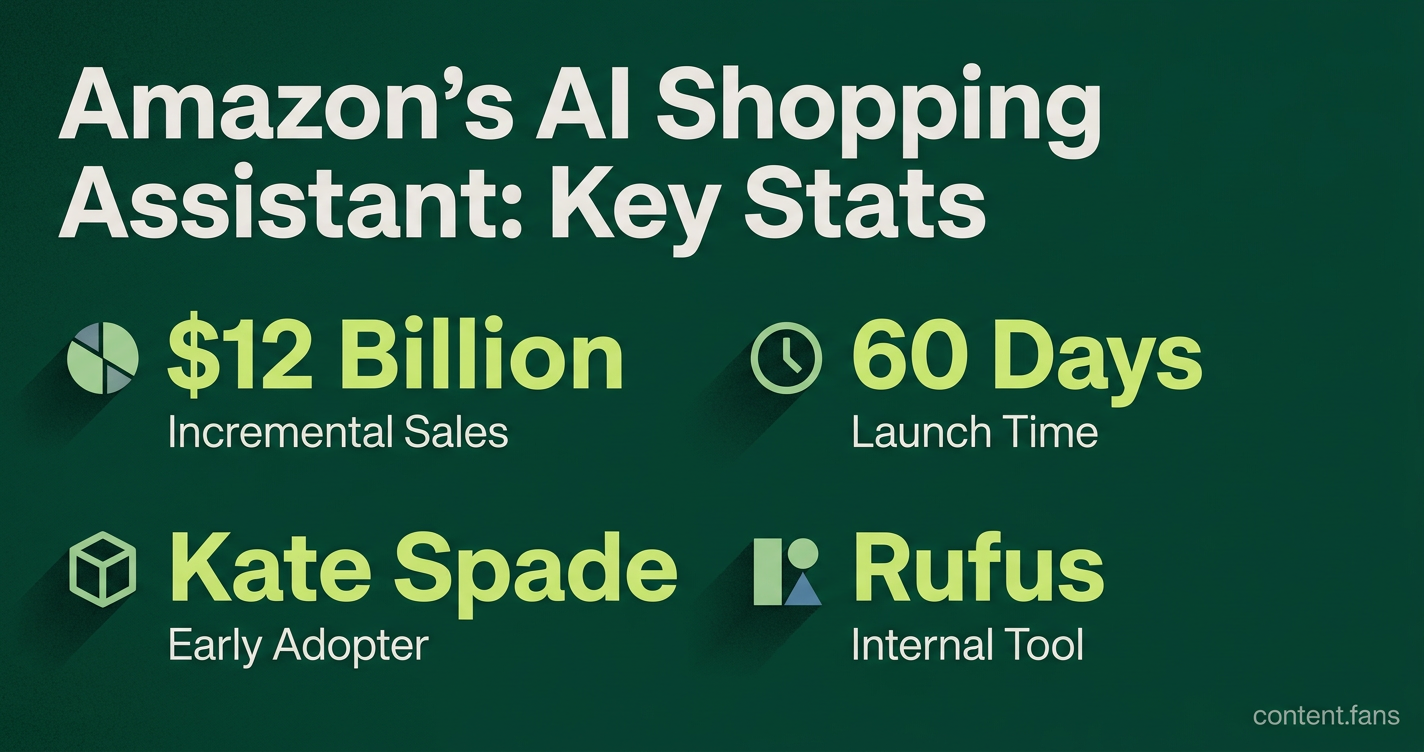
Amazon now sells its AI shopping assistant technology to other retailers, a strategic move that commercializes a tool reported to have driven nearly $12 billion in incremental sales. A GeekWire report confirms that its AWS division is packaging the powerful discovery and personalization engine for deployment on third-party e-commerce sites.
This shift allows Amazon to monetize its substantial AI investments while offering other merchants access to a mature, battle-tested platform, eliminating the need for them to develop similar technology from the ground up.
How the Agentic Shopping Assistant Works
Amazon is now licensing its powerful AI shopping assistant as a B2B service through AWS. This allows other retailers to quickly integrate a branded, conversational AI tool onto their own e-commerce sites, leveraging Amazon's proven technology to enhance product discovery and personalize the customer journey without in-house development.
Marketed by AWS as the 'Agentic Shopping Assistant,' the service enables retailers to launch a custom-branded assistant in approximately 60 days. Crucially, merchants retain full control over their catalog data, business rules, and customer interactions. Early adopter Kate Spade, a Tapestry-owned brand, successfully piloted a gift-concierge feature after just 2.5 months of testing.
The foundation for this service is the proven success of Amazon's own conversational AI, formerly codenamed Rufus. This internal tool significantly streamlined the customer journey from research to purchase, reportedly generating billions in incremental revenue. Offering this system as a commercial product signals a market shift where 'agentic commerce' is evolving from an experimental feature to a standard expectation for online retail.
What comes in the box
According to Digital Commerce 360, this new service joins a suite of existing AI tools for Amazon Business users:
- Amazon Business Assistant - conversational help for account setup and buying recommendations
- Savings Insights - pattern analysis that flags lower-cost options
- Spend Anomaly Monitoring - alerts when purchasing behavior deviates from normal
Combined, these services demonstrate Amazon's strategy to build a comprehensive, multi-layered AI stack that addresses the full e-commerce lifecycle, from procurement and discovery to spend governance.
Strategic ripple effects
- Competitive Tension: While retailers gain access to sophisticated AI, their dependence on AWS infrastructure deepens. Industry analysts warn that the risk of vendor lock-in becomes significant when core merchandising logic and customer interaction data are managed within a single third-party ecosystem.
- The Platform Race: This move intensifies the competition among tech giants. Google is integrating shopping features into its AI-driven search, and Microsoft has embedded checkout capabilities in Copilot. As GeekWire highlights, citing Accenture estimates, control over this "agent layer" could influence a staggering $3.1 trillion in e-commerce transactions by 2030.
- Data Governance Concerns: Although Amazon publicly assures retailers they retain control over their data, as reported by CNBC, critical questions persist. Concerns revolve around policies for log data storage, whether customer queries will be used for Amazon's own model training, and the potential for unilateral policy changes that could impact agent functionality.
Due-diligence checklist for adopters
Retailers evaluating the Agentic Shopping Assistant should conduct thorough due diligence, focusing on these key questions:
- Does the contract guarantee self-service export of all conversation logs and recommendation metadata?
- Are retailer-specific prompts and customer queries explicitly excluded from use in training Amazon's global models?
- Can the assistant and its associated workflows be migrated to another platform without complete redevelopment?
- What is the mandatory notice period before AWS can enforce policy changes that affect agent functionality, such as the March 2026 seller-tool update referenced by industry commentators?
While AWS markets the assistant as a neutral technology enabler, its adoption presents a complex trade-off. The compelling combination of rapid deployment, a proven track record of boosting sales, and retained brand control is expected to drive adoption. However, as the agentic commerce landscape matures, adopters will need to maintain continuous scrutiny over platform dependency, data usage policies, and their long-term competitive positioning.