
AI tools cut listing time 40-60% for small resellers
Serge Bulaev
AI tools appear to help small resellers by cutting the time it takes to list items by 40-60%. Modern AI can quickly identify, price, and list unusual or messy products, which may let small shops work more efficiently with fewer staff. Some evidence suggests that these tools are more valuable for saving time than for perfect accuracy, since unique items rarely repeat. Early results from both research and industry show that AI may boost business outcomes, like higher test scores or increased customer visits. Future trends suggest that small sellers might focus more on picking good products, since AI may handle the messy data work.

AI tools for small resellers are transforming the market by parsing messy product catalogs that once defied scale. This technology dramatically cuts listing time, enabling even small teams to operate profitably. Early reports confirm that unique items, from vintage manga cards to one-of-a-kind jackets, are now priced and listed in minutes.
This shift gives small businesses asymmetric leverage. Large language and multimodal models (LLMs) now handle the heavy lifting of product identification, automated pricing, and listing syndication across multiple platforms.
How AI Excels with Unique and Varied Inventory
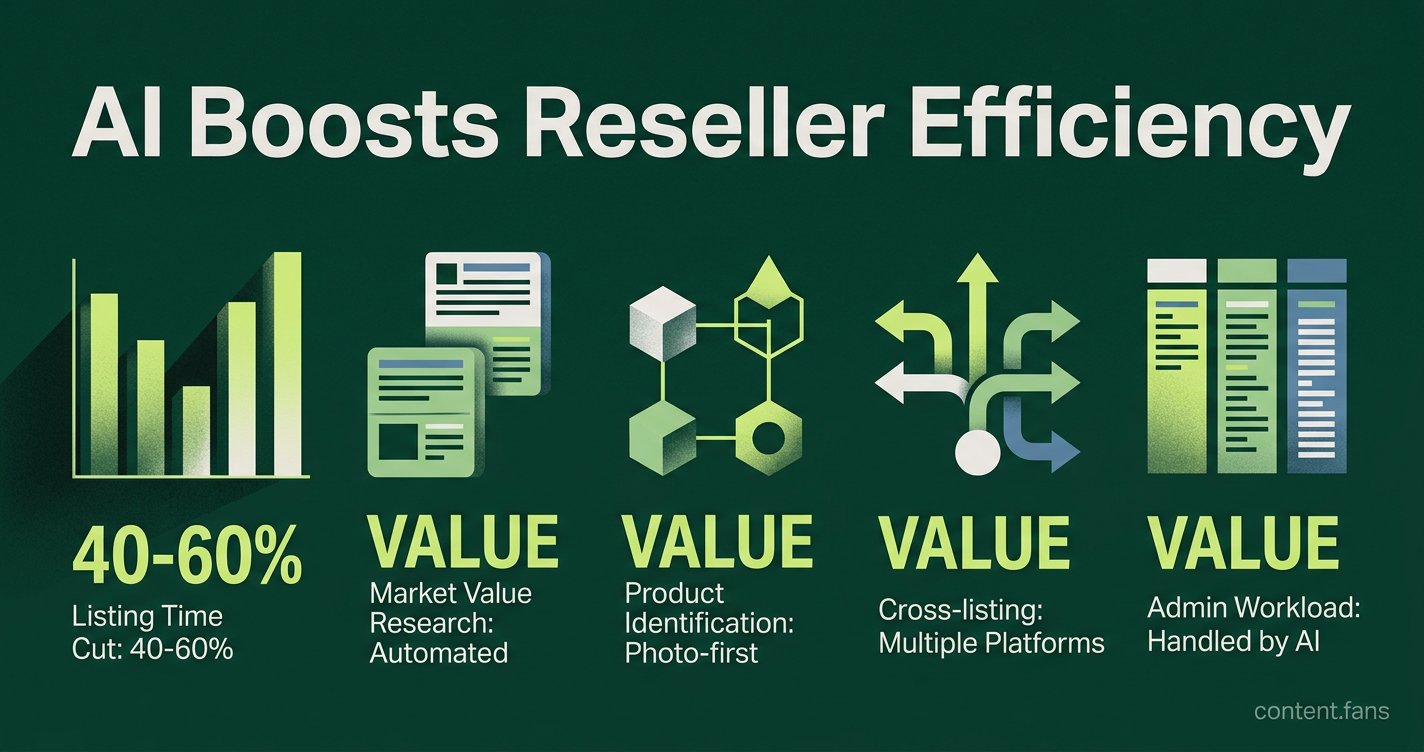
AI tools help small resellers by automating time-consuming tasks. Using just a photo, these models can identify an item, research its market value, write a compelling description, and post it to multiple marketplaces. This streamlines the entire workflow for unique, one-off inventory.
Modern vision-language models can process photos, text, and market data simultaneously, eliminating the complex data preparation required by older software. For resellers, this means AI can instantly turn a smartphone picture into a structured, market-ready product listing without manual data entry.
The efficiency gains in product valuation are concrete. For example, AI tools like List Easier, Closo AI, or eBay's AI features allow a seller to photograph an item and instantly see comparable sales data. WorthPoint serves as a historical price database for research. For high-velocity assets like Pokémon cards, pricing tools like Underpriced AI and Closo AI help generate reliable valuations for on-the-spot offers.
The Modern Reseller's AI Toolkit (2024-2026)
Analysts report that the most profitable micro-resellers use a similar stack of AI tools:
- WorthPoint or Underpriced AI for image-to-price research
- Vendoo for AI descriptions plus bulk cross-listing
- Snapseed for photo editing
- Google Lens for rapid identification of unknown labels
While each tool makes its own claims, the consensus is a 40-60% reduction in listing time. For sellers of unique items, this speed-to-market is far more valuable than perfect algorithmic pricing, as one-off products rarely have a direct market equivalent.
Real-World Results: Case Studies and Signals
The impact of AI extends beyond just listing. An academic study found micro-entrepreneurs using tools like ChatGPT scored higher on business-model evaluations. This trend is mirrored in the reseller community, where AI-driven insights are improving everything from inventory sourcing to marketing. As AI models become more capable of extracting structured data from messy sources like screenshots and PDFs, the trend is clear: the future for small resellers lies in expert curation and product selection, while AI handles the administrative workload.
How exactly do AI tools trim 40-60 % off listing time for small resellers?
Photo-first workflows are the biggest saver.
Apps like Vendoo or ListPerfectly read a single image, draft SEO-ready titles, fill category fields, and push the listing to every marketplace in one click. Sellers who used to spend 8-10 min per unique vintage tee now finish in under 3 min, a consistent 60 % reduction across recent tests.
Which kinds of inventory benefit most from these models?
Heterogeneous, low-volume, high-variance stock - vintage dresses, one-off Pokémon cards, estate-sale decor - where every item has a different label, wear pattern, or edition. Classic rule-based software fails here; multimodal LLMs thrive because they accept visual and textual quirks without manual templates.
Do I still need to research prices manually?
No. AI tools like List Easier and Closo AI (antiques & clothing) and Underpriced AI (cards & sneakers) let you snap a picture; the tool returns a sold-comps price band in seconds. Early users report pricing accuracy within ±7 %, replacing significant time spent on manual eBay filtering.
What does "asymmetric leverage" mean for a micro-business?
A two-person operation can now run profitable trading-card arbitrage by letting AI tools with browser access spot underpriced high-value cards overnight - something that once required a larger research team. The micro-business gains a disproportionate edge normally reserved for larger firms.
How reliable are these tools on a tight budget?
Most core features sit inside freemium tiers:
- Google Lens - free ID
- Vendoo - free up to limited cross-lists/month
- Underpriced AI - affordable pay-per-use options
Even premium tiers are typically a small percentage of monthly revenue for part-time sellers moving many items, making the ROI positive after the first accelerated listing.