
Adelaide Scientists Unveil Laser That Detects Fake Alcohol in Sealed Bottles
Serge Bulaev
Scientists in Adelaide have created a laser device that may help find fake or dangerous alcohol in sealed bottles. Their research suggests this tool can spot toxic methanol in drinks like whisky or vodka without opening the bottle, and could let inspectors check thousands of bottles quickly. The system still needs more testing and approval before it is used widely, and there are questions about data integration and cost. It is not yet certain when the handheld version will be available, or how easily it will fit into the current supply chain.
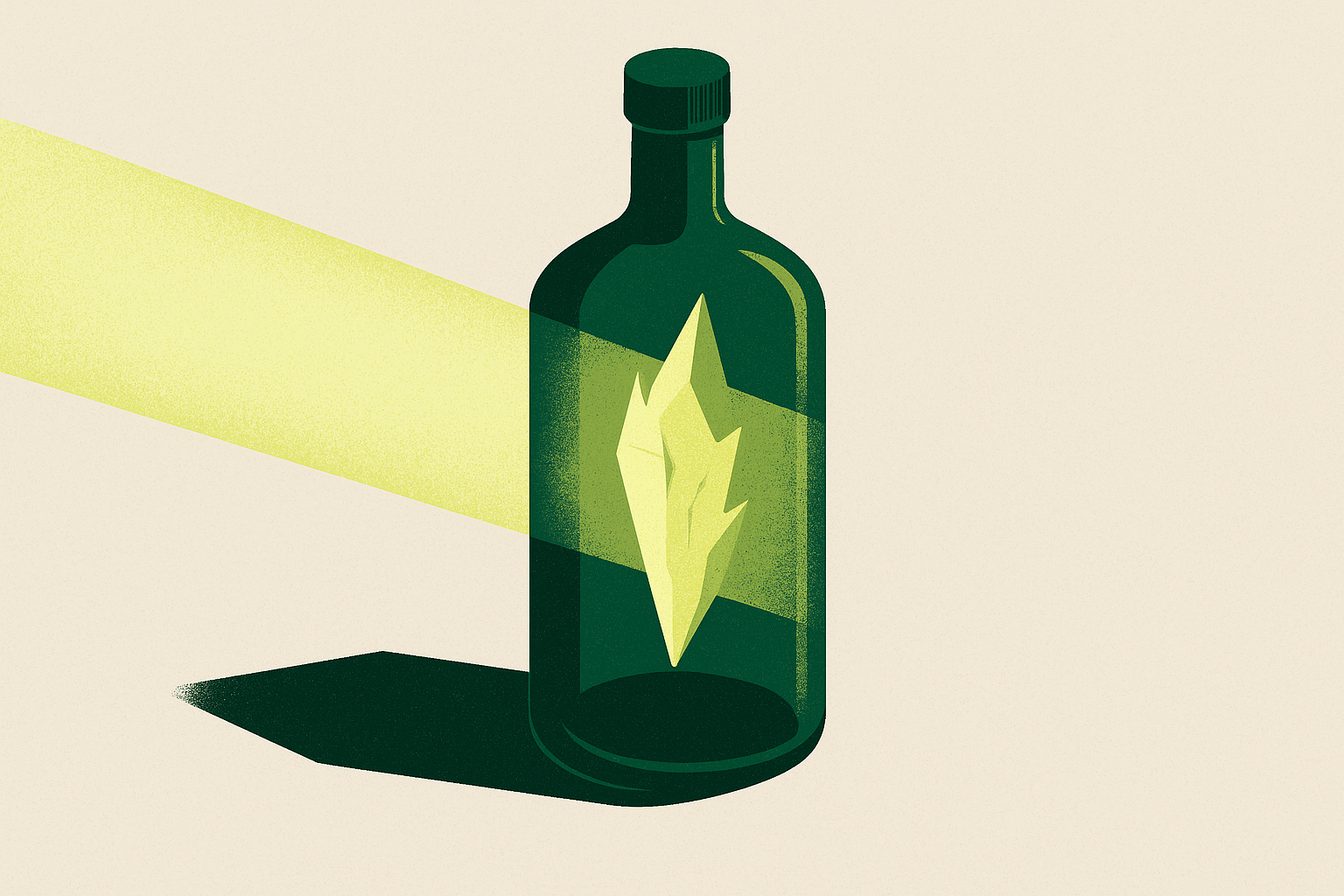
University of Adelaide scientists have developed a revolutionary laser that detects fake alcohol, including toxic methanol, inside sealed bottles without breaking the seal. This breakthrough technology uses a focused laser beam to identify counterfeit spirits like whisky and vodka, offering a practical path to large-scale, non-destructive screening.
How the Laser Sees Through Glass
The device uses advanced Raman spectroscopy to see through the bottle. A laser illuminates the liquid, and the system analyzes unique light patterns, or 'vibrational fingerprints,' that return. This method identifies toxic methanol and other compounds by separating their chemical signatures from the liquid and the glass itself.
The Adelaide system refines this process with wavefront shaping and wavelength modulation. A diode laser with wavelength modulation illuminates the bottle, and scattered light returns with spectral fingerprints unique to methanol, ethanol, and other compounds. Wavefront shaping corrects for glass curvature, while spatial offsets allow the system to ignore fluorescence from colored glass, a common challenge in spirits packaging.
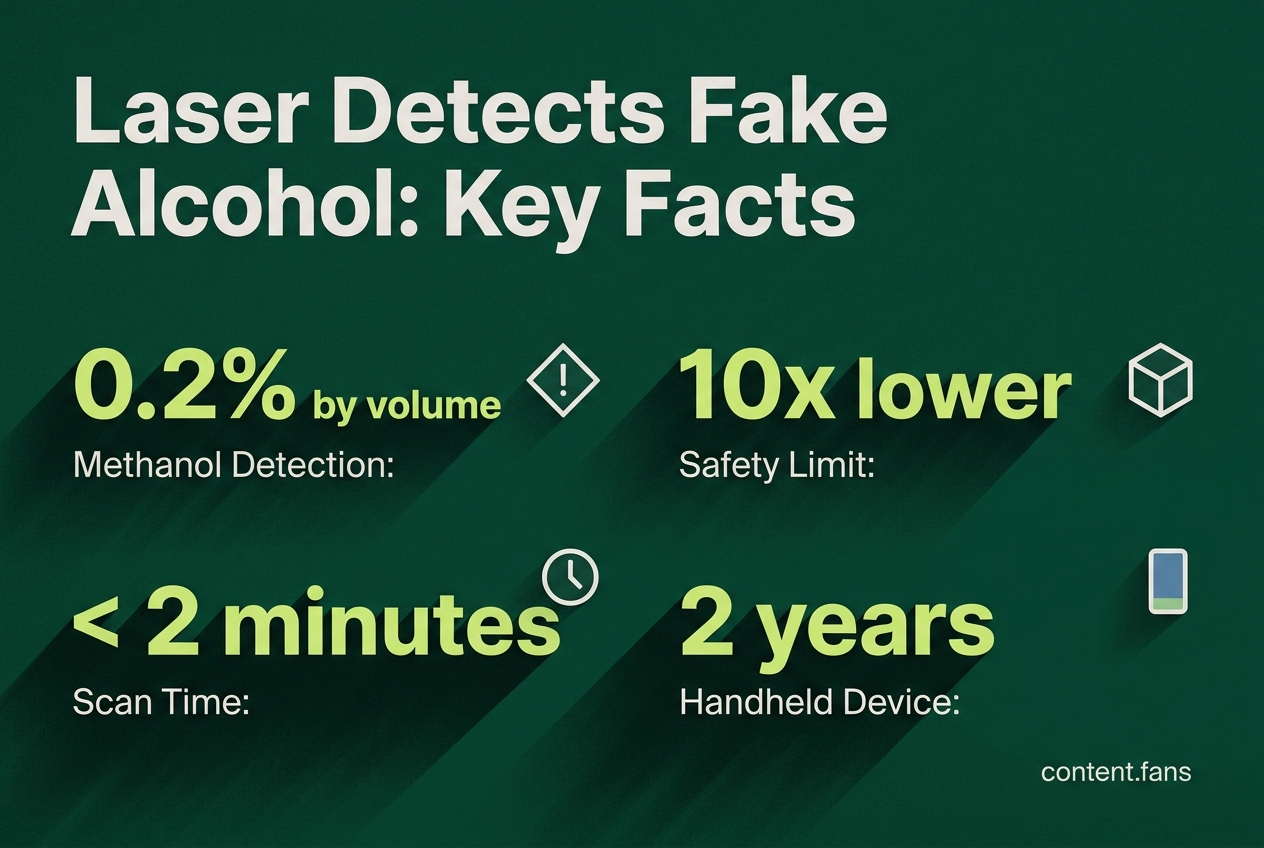
Laboratory trials successfully detected methanol at 0.2 percent by volume - ten times lower than the international safety limit - through dark brown bottles. Researchers told ABC News this detection limit is comparable to lab-based chromatographs but requires no reagents and takes less than two minutes per scan.
From Laboratory to Loading Dock: Supply Chain Applications
The technology is poised to transform safety and authenticity verification across the alcohol supply chain. A single optical probe could allow inspectors to test thousands of bottles daily. Potential deployment scenarios include:
- Warehouse Screening: Pallets and bulk shipments can be scanned upon intake, flagging suspect batches for laboratory confirmation without unpacking.
- Border Control: Customs officers could test imported spirits without breaking tax seals, speeding up clearance of legitimate goods and simplifying inspections.
- Retail Spot Checks: A portable, battery-powered reader could allow staff to verify the authenticity of high-value stock on-site, giving a pass/fail result in minutes.
- Brand Protection Audits: Distillers can use a handheld device during mystery shopper visits to confirm on-trade authenticity and protect brand integrity.
The Road Ahead: Commercial and Technical Hurdles
Lead physicist Dr. Ralf Mouthaan stated that a handheld device could be developed within two years and that the technology is currently restricted to the lab, indicating it is a milestone toward practical use but not yet a final product. However, several challenges remain before widespread use.
Cost and ROI: Industrial Raman packages represent a significant capital expense, though operating expenses are low due to a lack of consumables. Annual calibration contracts and initial validation can slow adoption.
Data Integration: Existing enterprise resource planning (ERP) systems in distilleries are not designed to store full Raman spectra. Translating each scan into a secure yes-or-no flag that travels with a product's digital ID is an ongoing software development challenge.
Regulatory and Safety Approval: Before market release, the system requires regulatory validation under ISO 17025 protocols, safety certification (ideally Class 1 for operation without eye protection), and qualification for interoperability with global supply chain software.
Beyond Counterfeit Alcohol
The research team plans to expand the technology beyond authenticating spirits. The core adaptability of the wavefront-shaping approach makes it suitable for other high-value industries plagued by fraud. Potential applications include:
- Wine fraud detection
- Olive oil contaminant screening
- Counterfeit perfume identification
- Trace chemical detection in food, including microplastics
This versatility positions the technology as a powerful tool for non-destructive verification at a commercial scale, shifting laboratory analysis from routine screening to the targeted confirmation of flagged products.
Frequently Asked Questions
How does the laser detect chemicals through sealed glass?
The system uses Raman spectroscopy with wavefront shaping. It directs a laser through the glass and analyzes how light scatters off the liquid's molecules. By computationally manipulating the beam, it can isolate the liquid's unique chemical signature while ignoring interference from the glass container, even if it's colored.
What can this technology detect?
The published research demonstrates detection of toxic methanol in spirits like whisky and vodka at concentrations ten times below international safety limits. The team is expanding its spectral libraries to identify markers for wine fraud, olive oil contaminants, counterfeit perfumes, and microplastics in food products.
What will a commercial system cost?
Industrial Raman systems represent a significant capital expense. While this is a substantial investment, operating costs are low as there are no consumables. The Adelaide team is developing a palm-sized prototype aimed at reducing both the size and cost for broader accessibility.
When will handheld devices be available?
The 2026 research publication is a proof-of-concept, not a final product. The team is actively designing a portable prototype for distilleries, bars, and border posts, but no official launch date has been confirmed. Commercialization will follow further engineering, testing, and regulatory validation.