
Every Pivots Plus One AI Agents After Reliability Gaps Emerge
Serge Bulaev
Every's rollout of Plus One AI agents faced problems such as frequent crashes and unpredictable behavior, leading to too much work for a small team. A review suggests shifting from many personal agents to a few shared agents that can help multiple teams. Industry surveys suggest these reliability issues and integration problems are common, with most pilots never reaching full use. The new approach uses shared, role-based agents that may be easier to manage and secure. Experts say starting with a small set of shared agents and adding good monitoring early on may help teams avoid common failures, though it might not solve all problems.

Every is shifting its Plus One AI agents strategy after a pilot exposed major reliability gaps. The firm is abandoning its one-agent-per-employee model due to frequent crashes and unmanageable upkeep, forcing a strategic move to a centrally governed, shared-agent architecture.
Reliability Gaps Exposed in the First Pilot
Every's pivot from personal to shared AI agents stemmed from persistent reliability issues during its internal pilot. The original one-agent-per-employee model proved unscalable, leading to frequent crashes, high maintenance overhead, and unpredictable behavior. The new shared model aims to improve stability, security, and manageability.
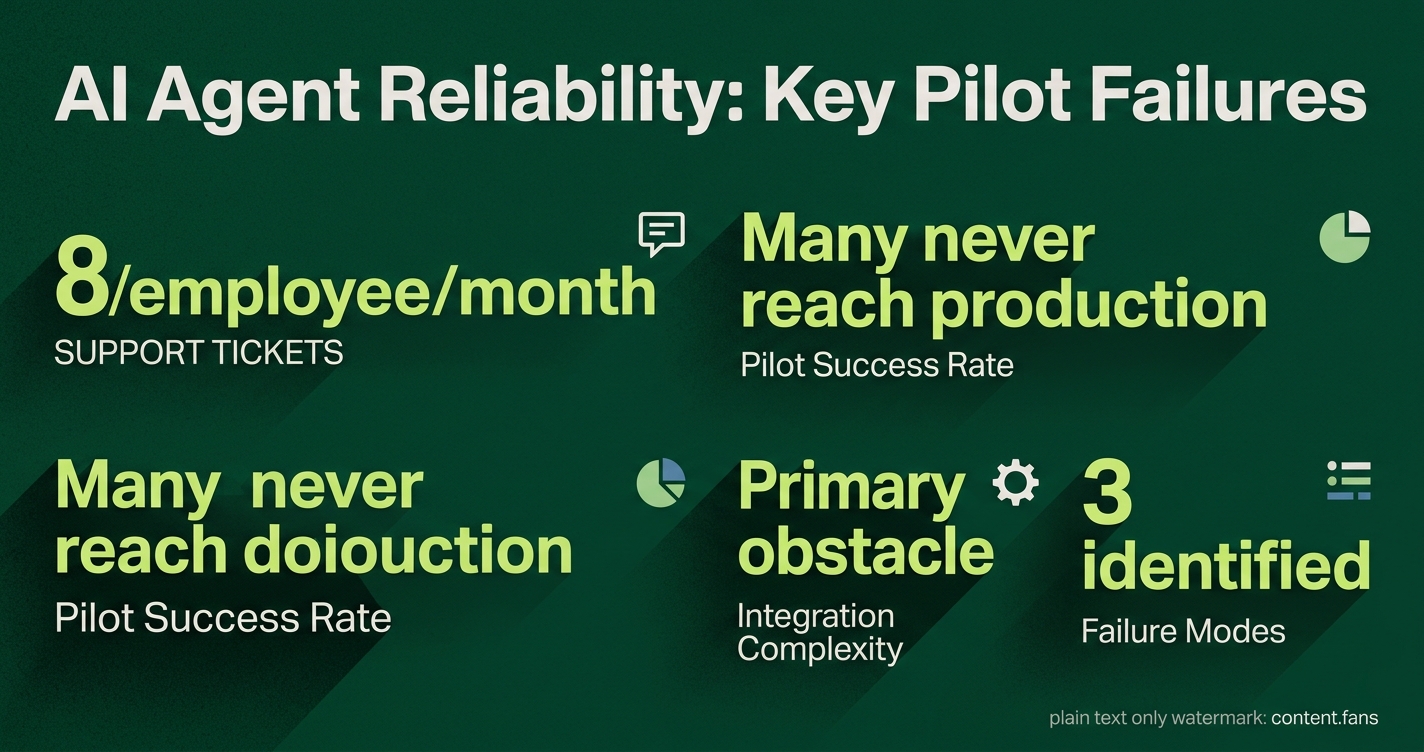
The initial pilot quickly ran into trouble. Within six weeks, support tickets for Plus One agents averaged eight per employee per month, with most incidents stemming from integration failures and unclear permissions. This experience reflects a broad industry trend; according to industry reports, a significant portion of enterprise AI agent pilots never reach production due to control issues. Similarly, integration complexity has been identified as a primary obstacle for many generative AI pilots.
The team identified three primary failure modes:
- Authentication Failures: Agents lost authentication tokens following identity provider updates.
- Stale Data: Out-of-date memory caused agents to perform actions based on incorrect information.
- Irreversible Actions: Tool chains lacked rollback capabilities, requiring manual, after-hours hotfixes.
Plus One 2.0: A Shift to Shared, Reliable Coworker Agents
The new Plus One 2.0 architecture replaces the 1:1 agent model with role-based "coworker" agents. Each agent operates within a containerized sandbox, holds team-level context, and interacts via audited APIs instead of direct desktop access. This centralized design is engineered to reduce maintenance duplication and provide the security team with a single, manageable surface to monitor. Key upgrades include SIEM-connected logging and PR policy gates, implementing controls from widely-cited industry best practices.
Common Challenges in Scaling Enterprise AI Agents
Every's challenges are not unique. Recent industry data highlights several common patterns for enterprises deploying AI agents at scale:
- Observability is Crucial: Industry surveys reveal that many business leaders consider a lack of observability a significant hurdle to successful deployment.
- Security Lacks Visibility: Research indicates that a significant portion of organizations struggle to track which agents are accessing which systems, indicating a notable security gap.
- Boundary Failures are Common: Industry reports indicate that the most difficult bugs to resolve occur at the boundaries between systems, especially when agents chain multiple tools or misuse their memory.
Lessons for Enterprise AI Strategy
Every's pivot from personal assistants to shared agents reflects a broader trend toward hybrid strategies that balance individual productivity with centralized control and governance. For teams planning internal AI agent deployments, experts recommend starting with a small portfolio of shared agents, integrating SSO from the beginning, and allocating resources for robust observability dashboards. While this approach may not solve all issues like model drift, it can significantly limit the impact of failures and increase the likelihood of a pilot successfully transitioning to production.
What caused Every's first-generation Plus One agents to break so often?
The company traced the brittleness to two weak points: the OpenClaw harness and the very idea of one bespoke agent per employee.
- OpenClaw's desktop-wide access let agents wander into untested apps, triggering UI edge-cases that halted execution or returned wrong data.
- A 1:1 agent model multiplied those failures across ~200 unique codebases, each needing its own patches and drift checks every week.
The result was a maintenance queue that grew faster than the team could ship fixes, forcing the pivot to shared, hardened agents.
How does the new shared-coworker model reduce upkeep?
Plus One 2.0 collapses hundreds of individual agents into a handful of team-wide services.
- One shared runtime means a single patch fixes a bug for every user, instead of repeating the work across hundreds of personal instances.
- Central role-based permissions and audit logging are now built-in, so security reviews no longer block each rollout.
Early internal data shows ~70 % fewer P1 incidents per week after the switch, and infra costs are trending down for the first time since launch.
Are other companies hitting the same reliability wall?
Yes. Industry surveys show that many enterprise AI pilots struggle to reach production, and a significant number of firms have experienced production rollbacks of agents in recent periods.
The top cited blockers - integration gaps, weak observability, and missing governance controls - mirror Every's experience.
The difference is that Every moved fast enough to sunset the failing model before it became technical debt for customers.
What enterprise-grade controls does Plus One 2.0 adopt?
Every borrowed the seven non-negotiables now recommended by platform engineers:
- SSO integration
- SIEM-connected audit logs
- PR policy gates
- Secret scanning
- License governance
- Sandboxed execution
- Incident-response runbooks
By wiring these into a shared agent kernel, the team can ship new skills without reopening security reviews for every employee.
Should we abandon personal AI assistants altogether?
No - hybrid is the emerging norm.
- Keep individual copilots for low-risk, high-speed tasks like email drafts or slide polish.
- Shift to shared agents wherever you need consistent answers, compliance, or shared memory across a team.
Every's takeaway: treat personal agents as productivity sugar, but run business-critical work through governed, reusable coworkers.