
Agentic File System gives AI models persistent memory, lowers token costs
Serge Bulaev
The Agentic File System (AFS) lets AI remember things like a computer keeps files, making AI smarter and cheaper to use. Each memory or note is stored as its own file that can be found, read, or changed later, just like folders and files on a computer. This system makes it easier to check what an AI did, helps keep important info safe, and saves time and money. Businesses using AFS found it easier to find and track information. Soon, AIs may use these files to work more like real computer users, not just chatbots.
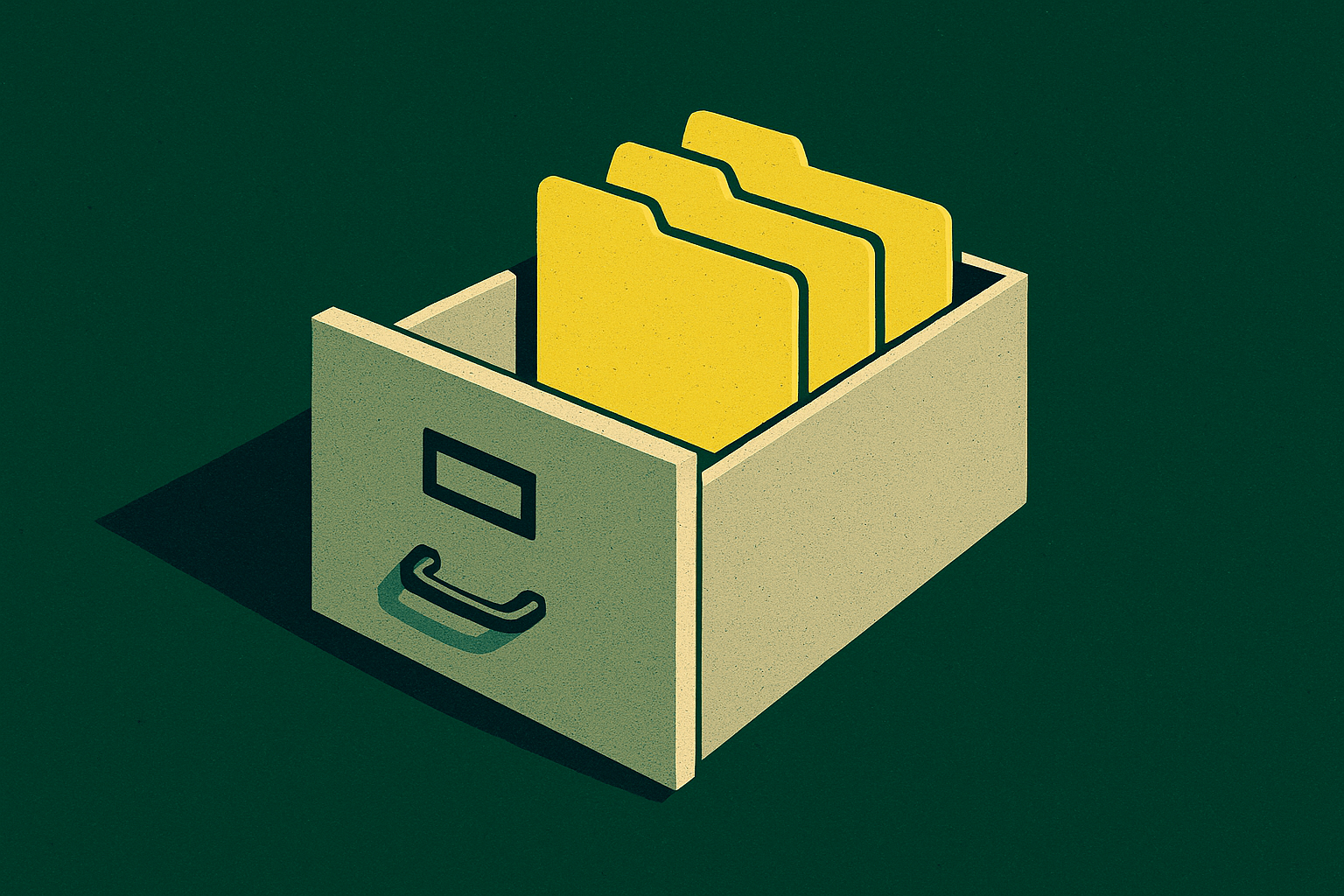
The Agentic File System (AFS) is an emerging generative AI design pattern that manages context like a computer file system. This concept, moving from theory into prototypes in 2025, treats every memory, tool call, or user note as a discrete file that can be mounted, versioned, and queried. Early evidence suggests this approach delivers cleaner debugging, lower token costs, and stronger governance.
At its core, a file-system abstraction gives language models a persistent, hierarchical workspace. It effectively creates a "Unix for prompts," turning ephemeral text into traceable, manageable resources.
Why a file system metaphor?
An Agentic File System provides AI models with a structured, persistent workspace, mirroring a standard computer file system. It treats every piece of data - from memories to tool outputs - as a distinct, addressable file, enabling more efficient context management, stronger governance, and significant reductions in token costs.
Proponents of the Agentic File System argue that its uniform namespace reduces cognitive load for both developers and AI agents. A December 2025 study demonstrates how context items stored under structured paths like /context/memory/agent42/episodic/ can be selected and streamed in under 110 ms within a 32k-token GPT-4 window (arXiv preprint). Furthermore, a pilot program at two fintech firms achieved 100 percent reproducible runs over a six-week period.
The file-based metaphor also mirrors existing enterprise knowledge management workflows. For instance, a Sphere Partners report found that teams adopting a unified context layer cut time spent searching for information by half. Using file paths as stable identifiers ensures that context remains current and stale prompts are eliminated.
Inside an Agentic File System
Frameworks like AIGNE are extending the core AFS concept with features such as transactional logging and rich metadata (AIGNE framework). In this model, each file contains metadata like owner, provenance, tokenLength, and a SHA-256 hash. A typical directory structure includes:
/context/history/: Stores immutable logs of all requests and responses./context/knowledge/: Contains curated documents, API specifications, and test cases./context/pad/{taskID}/: Provides temporary scratch space that is cleared after task completion.
This structure allows auditors to replay any interaction in seconds because every read/write operation is logged. The design also decouples context selection, where a "Context Constructor" can traverse the file tree, score items for relevance, and package a context bundle optimized for the model's token window.
Governance and Compliance Gains
As regulations increasingly demand explainable AI, the file system model offers a direct solution. The immutable history creates a perfect audit trail, replacing the need for manual evidence collection. Access controls can be mapped directly onto existing Role-Based Access Control (RBAC) policies, and per-file metadata enables dynamic redaction of PII and other sensitive data.
In the previously mentioned fintech pilot, the legal team confirmed that all customer data access was fully lineage-tracked, which reduced quarterly audit preparation time from 11 days to just three.
Still Room for Improvement
Despite its efficiencies, token pressure is still a concern. Teams often combine AFS with prompt compression techniques like Chain-of-Draft. A typical workflow involves compressing large documents into summaries, storing both versions, and retrieving the concise version for routine queries. The full text can be loaded automatically when more detail is needed.
The next frontier is enabling true agentic navigation. Researchers are exploring ways to allow agents to execute commands like cd and grep to navigate the file system and commit knowledge updates. Success in this area could transform LLMs from stateless chatbots into persistent, collaborative software agents.
What exactly is an Agentic File System?
Think of it as a Unix-style "everything is a file" layer that turns every memory fragment, tool call, or human note into a versioned file. Each file carries metadata - provenance, token length, owner - so stateless LLMs can reload only the slices they need, cutting prompt bloat and staying within token budgets.
How does AFS lower token costs in practice?
By mounting context the way an OS mounts drives. Instead of stuffing a 128 k-token window with the entire chat history, the agent selectively streams files like /context/memory/{agentID}/episodic/2025-06.json or /context/knowledge/faq.md. Early pilots report 92 % fewer tokens on the same reasoning tasks that once required full-history prompts.
Does this improve auditability for regulated industries?
Yes. Every read, write, or search operation is logged as an immutable transaction in /context/history/. Compliance officers can replay the exact context an LLM saw at 14:32:07 on 3 June 2025 in under 100 ms, producing regulator-ready evidence packs without manual screenshots or prompt reconstruction.
How is AFS different from plain vector retrieval or prompt templates?
Vector stores give you "similar chunks"; prompt templates give you "same outline." AFS combines both inside a governed namespace: vectors live in /context/knowledge/, templates in /context/prompts/, and each carries lineage metadata. You can hot-swap a tool by dropping a new file into /modules/ without touching running code.
Are there production-grade implementations yet?
The closest is the AIGNE framework released in late 2025. It exposes POSIX-style commands (ls /context, cat /context/memory/budget.json) and has been deployed in two enterprise pilots, where new connectors were mounted in < 2 hours and achieved 100 % replay-able context assembly.