
Google unveils AI shopping agents, Universal Commerce Protocol for 2026
Serge Bulaev
Google is making shopping and ads smarter and smoother by adding AI-powered shopping agents and a new Universal Commerce Protocol (UCP) for 2026. These AI agents will help people ask questions and shop directly from search, with ads showing up at just the right time. Merchants can connect their stores easily, letting AI handle things like checking stock and payments. Video ads and creator-led shopping features will make YouTube a bigger part of buying online. Soon, shopping with Google will be fast and almost effortless, with just a few clicks needed to buy what you want.
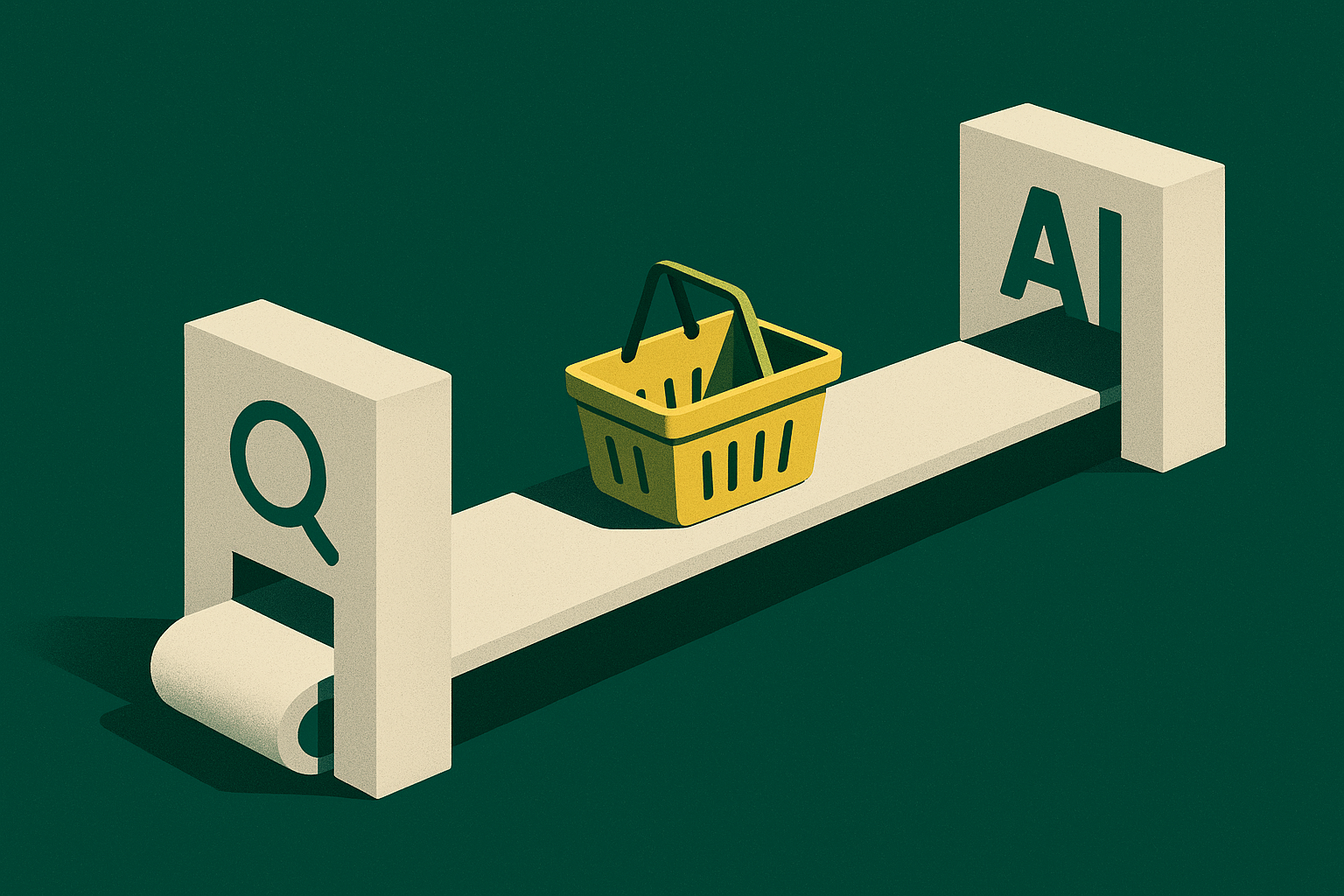
Google unveils AI shopping agents and the Universal Commerce Protocol (UCP) for 2026, outlining an agent-driven future for ads and commerce. Vice President Vidhya Srinivasan detailed new ad formats and autonomous agents designed to create a seamless search-to-purchase journey, representing the largest Google Ads overhaul since the mobile transition.
Why AI agents change the funnel
Google's AI agents transform the sales funnel by engaging users in conversational search. These agents answer product questions and then present context-aware ads at the peak moment of purchase intent, effectively shortening the path from discovery to conversion and creating a more integrated, immediate shopping experience.
A recent Search Engine Land report details how AI Mode in Search will conversationally answer product queries before surfacing context-aware ads precisely at the moment of user intent. With Gemini 3 dynamically generating ad creatives, Performance Max campaigns can now learn faster and target broader query clusters beyond traditional keyword lists.
Early benchmarks for Gemini-powered Performance Max campaigns show a 97% growth in conversions and a return on ad spend (ROAS) of 80-150% above baseline following the initial two-to-four-week learning period. Video continues to be a critical asset, with video placements outperforming static image variants by up to 40%.
What Universal Commerce Protocol means for merchants
The Universal Commerce Protocol (UCP) is an open standard, co-developed with partners like Shopify and Target, designed for merchants. It standardizes communication through REST endpoints for Catalog, Checkout, and Orders. This allows any certified AI agent to programmatically check inventory, arrange shipping, and process secure payments using tokenized credentials. The protocol is scheduled to launch for eligible US Merchant Center accounts on January 11, 2026, with an APAC expansion planned for later that year.
Fast-track integration checklist
- Configure Merchant Center settings for shipping, returns, and product eligibility.
- Join the UCP waitlist through your Google account team.
- Enable Google Pay or another supported tokenized payment service provider.
- Publish a public UCP profile detailing capability endpoints and keys.
- Test integration using the open-source Python client available on GitHub.
New ad products coming to YouTube
Srinivasan also highlighted new creator-led commerce tools for YouTube. An AI-powered system will match brands with relevant creators, enabling the insertion of "Direct Offer" ad units. These units present personalized deals to viewers in real-time without altering the product's public price. This strategy is supported by a 2025 Google and Kantar survey, which found creators to be the most trusted tastemakers among viewers.
Metrics to watch in 2026
Advertisers should monitor these leading indicators as agentic commerce scales:
- The share of Search impressions generated within AI Mode.
- The conversion rate of UCP-assisted checkouts compared to traditional site-redirect flows.
- The performance breakdown between video and static image assets in campaigns.
According to Google's official UCP guide, real-time inventory accuracy is critical; orders must sync to merchant systems within minutes. Failure to meet this service-level agreement (SLA) will redirect the user, breaking the frictionless experience. By mid-2026, the synergy of AI Mode, Gemini creatives, and UCP checkout is projected to reduce the average purchase path to under three clicks, transforming Google's conversational interfaces into powerful point-of-sale platforms.
What is the Universal Commerce Protocol (UCP) and when will it go live?
The Universal Commerce Protocol is an open standard that lets AI agents discover merchant capabilities, negotiate payment and shipping terms, and complete checkout without ever leaving a Google surface.
- Live date: 11 January 2026 for US Merchant Center accounts; APAC rollout accelerates through the year.
- Core idea: One REST endpoint set replaces dozens of retailer-specific integrations, so an agent can move from "find me a lightweight suitcase" to paid & shipped in a single conversation.
Early partners include Shopify, Target, Etsy, Walmart and 20-plus other retailers; reference code is already on GitHub.
How do AI-native creative tools change campaign performance today?
Advertisers running Performance Max with Gemini integration report:
- 80-150 % true ROAS uplift after the 3-4-week learning phase (click-only attribution).
- 97 % jump in conversion volume between 2024 and 2025 as AI expanded reach to YouTube Shorts, Discover and Gmail.
- 25-40 % higher performance when video assets are added instead of static images alone.
The system assembles headlines, images and voice-overs on the fly, then auto-bids across Search, YouTube and Display, freeing teams from manual A/B iterations.
What new ad formats appear inside Google's AI Mode?
AI Mode is keyword-less; ads surface while users chat, upload photos or ask follow-up questions.
- Direct Offers pilot: brands inject a private coupon or bundle at the moment the agent signals high intent, without changing public site pricing.
- Ads sit inline with organic shopping suggestions, keeping the conversational flow intact.
Vidhya Srinivasan sums it up: "We aren't just bringing ads to AI experiences; we are reinventing what an ad is."
How can retailers opt in to agent-driven checkouts before 2026?
- Verify US Merchant Center status and confirm checkout-eligible products.
- Request UCP wait-list approval from Google (response time ~5 business days).
- Expose a public UCP profile (capabilities, payment handlers, public keys).
- Enable Google Pay tokenization and map shipping/returns rules.
- Test with the Python sample; Shopify merchants can toggle UCP inside the Google & YouTube app (average integration 4-8 weeks).
Full step-by-step guide is published on the Google for Developers site.
What should marketers measure in an agentic-commerce world?
Traditional funnel metrics still matter, but three new signals are proving predictive:
- Conversation-to-cart rate - how often the agent moves from Q&A to "ready_for_complete" state.
- Agent fallback rate - share of sessions that hit the human continue_url; high rates flag pricing or policy gaps.
- Tokenized repeat rate - purchases made without re-authorizing payment, hinting at loyalty embedded in the agent wallet.
Advertisers who pair these signals with click-only attribution are seeing the clearest picture of AI-driven uplift.