
YouTube pivots monetization, integrates pre-production sponsorships for creators
Serge Bulaev
YouTube is changing how creators make money by helping connect them with sponsors before making videos. This new system may give brands more ways to be involved early, and lets creators earn from sponsorships and ads. Competition from platforms like TikTok and Netflix appears to be one reason for this change. The new tools might help creators earn more by mixing sponsorships, ads, and fan support. Early reactions suggest some studios might welcome the pre-production funding, but there may still be challenges as creators look for the best ways to make income.
In a major strategic shift, YouTube pivots monetization, integrates pre-production sponsorships for creators, and now acts as a matchmaker between channels and brands. This new model allows advertisers to fund ambitious projects before filming begins, a move designed to help creators bankroll premium content while solidifying YouTube's market position.
The initiative comes as competition intensifies. Industry reports highlight a growing convergence between YouTube and Netflix, while recent TikTok disruptions have prompted many influencers to explore YouTube Shorts. By enabling early advertiser involvement, YouTube aims to reduce creator churn and protect its dominance in the creator economy.
How YouTube's Pre-Production Sponsorships Work
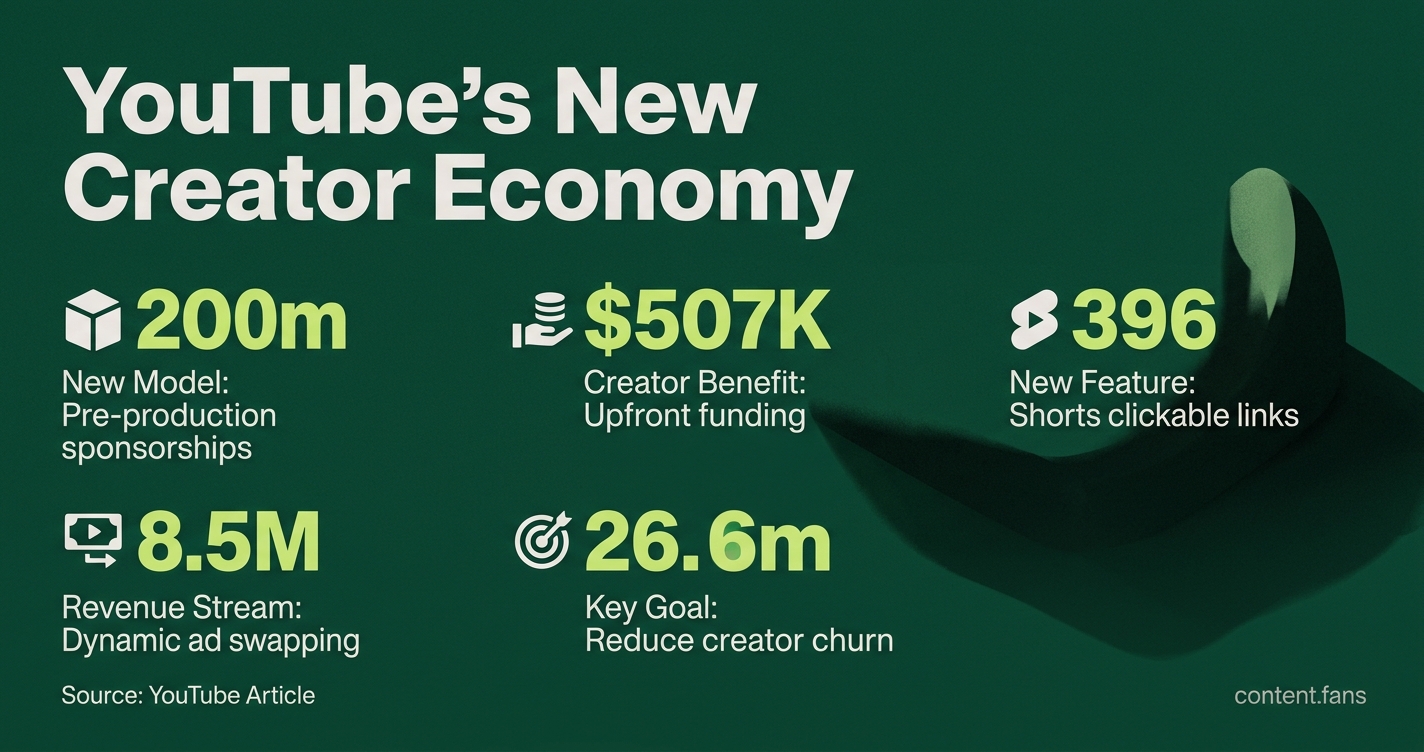
The new pre-production sponsorship model allows brands to invest in videos before they are created, securing placement and funding projects upfront. This system acts as a financing tool for creators, connecting them with advertisers through a dedicated hub to bankroll more ambitious content on the platform.
Central to this change is a new "brand partnership hub" that industry sources suggest enables dynamic ad swapping to monetize back catalogs. This build-out comes as the platform emphasizes its economic impact, having reportedly paid substantial amounts to creators and media companies in recent years.
This sponsorship layer complements the existing YouTube Partner Program (YPP). To qualify for YPP, creators typically need to meet subscriber and watch time thresholds, along with YouTube's monetization policies. After joining, members earn a significant portion of ad revenue on their content.
Key Benefits for YouTube Creators
The new system introduces several key advantages for monetizing content:
* Upfront Funding: Pre-production sponsorships offer significant income potential, with industry reports suggesting substantial payments per video.
* Enhanced Shorts Monetization: The hub reportedly introduces clickable links within Shorts, a long-requested feature that opens new affiliate and e-commerce opportunities.
* Recurring Revenue: Dynamic ad swapping allows a single video to feature different brand deals over its lifetime, creating a sustainable revenue stream from evergreen content.
Competitive Landscape Driving the Change
YouTube's pivot is largely a strategic response to increasing competition. Industry commentary suggests Netflix's ad-supported tier provides advertisers with "trusted, premium content" and could license creator catalogs, creating a rival for high-quality studios. This makes YouTube's pre-production funding a crucial tool for creator retention.
In the short-form video arena, YouTube Shorts viewership has grown substantially, while TikTok's post volume has also increased significantly. Industry experts are urging creators to adopt multi-platform strategies after recent outages highlighted the risks of platform dependency.
The Modern Creator's Monetization Stack
For established creators, AdSense is rarely the primary income source. Industry guides confirm that larger channels rely on a diversified revenue stack, which typically includes:
1. Programmatic Ads: Standard pre-roll and mid-roll ad placements.
2. Direct Sponsorships: Brand integrations, now facilitated by the new partnership hub.
3. Fan Funding: Direct support through features like Channel Memberships and Super Chat.
4. Affiliate & Product Sales: Revenue from affiliate marketing and selling merchandise or digital products.
YouTube's investment in sponsorship infrastructure reflects this reality. By integrating direct brand deals into its existing dashboard, the platform offers a hybrid model that combines predictable ad revenue with high-value sponsorship opportunities.
Initial Reactions and Market Outlook
The response from creators is mixed. Some boutique studios have expressed concern that the platform's algorithm no longer favors their long-form content, leading them to explore other services. However, the prospect of guaranteed pre-production funding is an attractive incentive, particularly as CPMs remain high in lucrative niches like tech and finance.
Broader economic indicators are strong. With overall creator-economy payments growing substantially in recent years, YouTube's move appears well-timed. This strategy may be less of a fundamental pivot and more of a formalization - bringing existing, off-platform sponsor relationships into its official monetization toolkit.
What is YouTube's new pre-production sponsorship model?
YouTube is testing a system that lets advertisers commit funds before a single frame is shot. Instead of waiting for a finished upload, brands can now browse incoming proposals, lock in placement, and finance production budgets up-front. Early pilots show creators receiving substantial advances against future integration, turning traditional post-upload ad splits into a green-light financing tool.
Why is YouTube launching this feature now?
Netflix and TikTok have attracted a significant number of mid-tier creators in recent months, according to industry reports. Netflix's new revenue-share catalog program and TikTok's creator stipends have made exclusive content deals more common. Industry sources suggest that "studio-sized" YouTubers are increasingly exploring premium production options; pre-production sponsorship is the platform's counter-offer to keep the next wave of premium projects inside YouTube.
Who can access pre-production sponsorships today?
Access is invite-only and tied to existing brand partnership programs. YouTube Partner Program eligibility is typically based on thresholds such as subscriber count and watch time or Shorts views, plus meeting YouTube's monetization policies. Brand sponsorship marketplaces, when they exist, are separate from YouTube's standard eligibility rules and are not publicly described with specific criteria.
How does revenue sharing work under the new model?
For standard long-form ads, YouTube commonly states a 55% creator share and 45% YouTube share. Sponsorships or integrations are separate creator-brand deals and are not the same as YouTube's ad-revenue share. Industry reports suggest the advance structure varies based on performance targets, giving brands downside protection while letting creators retain upside on viral hits.
Will this replace traditional pre-roll and mid-roll ads?
No. Pre-roll remains the default monetization layer for every public video; mid-roll still delivers strong performance on longer content. YouTube describes the new tool as an additional layer - think of it as a green-light fund that stacks on top of existing ad inventory. Creators who secure a pre-production sponsor can still collect their standard share of routine ad revenue once the video goes live, effectively earning from multiple revenue streams.