
Starbucks Launches Green Dot Assist Virtual Assistant to Improve Staff Workflows
Serge Bulaev
Starbucks deploys AI-powered Green Dot Assist to help baristas with recipes, troubleshooting, and staffing in a streamlined digital workflow.
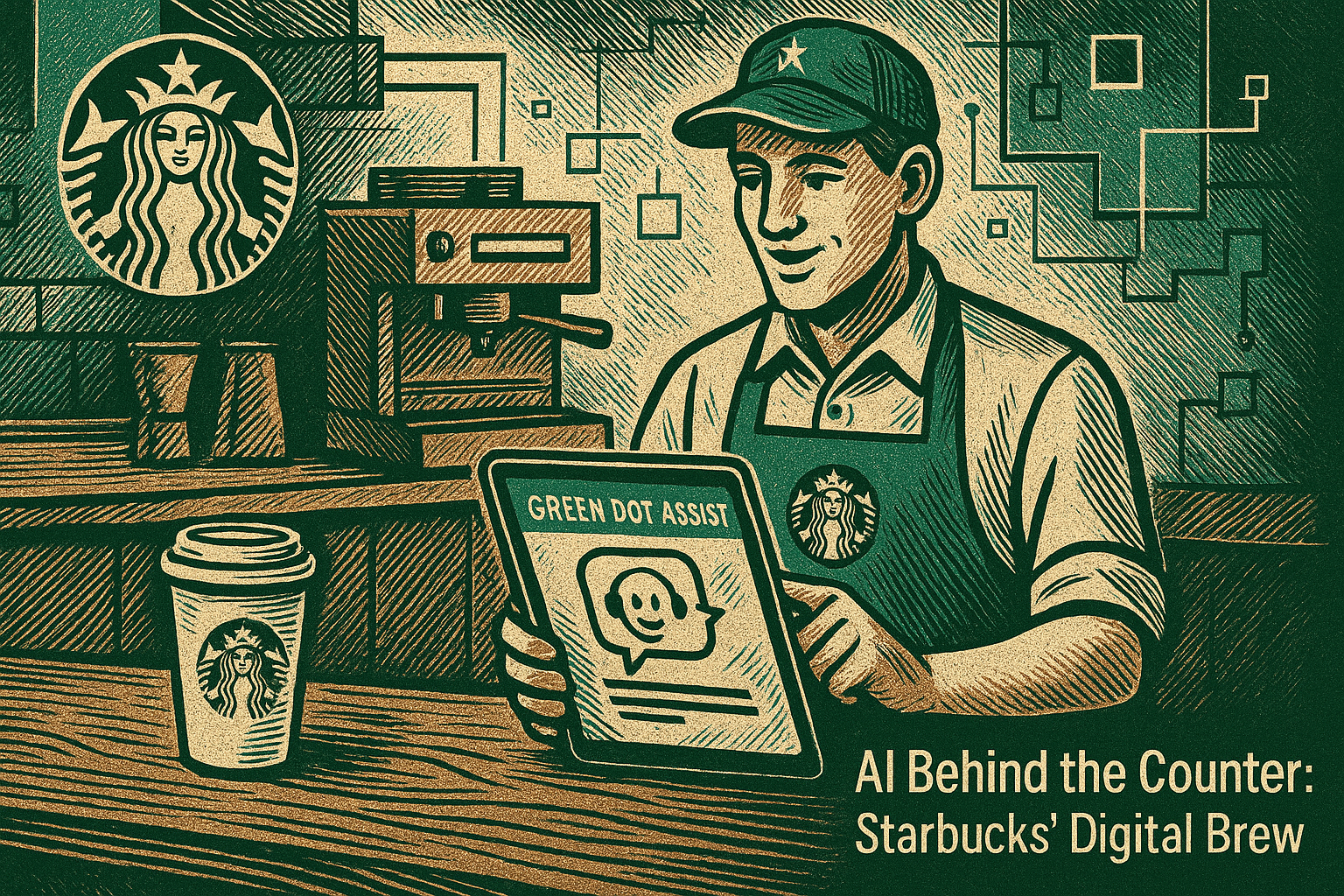
Brewing the Future: Starbucks' Green Dot Assist Steps In
Here's the text with the most important phrase in bold markdown:
Starbucks is revolutionizing its coffee shops with Green Dot Assist, an AI-powered barista helper deployed in 35 stores across the US and Canada. The digital tool provides instant recipe guidance, troubleshooting support, and shift management assistance on iPads, aiming to streamline operations and boost employee efficiency by 2026. Built on Microsoft Azure's OpenAI platform, the technology helps baristas quickly access information, reduce errors, and spend more time connecting with customers. Despite the technological upgrade, Starbucks remains committed to maintaining its human touch and supportive work culture. The innovation is part of a broader strategy to enhance store performance and employee experience while embracing digital transformation.
How is Starbucks Using AI to Support Baristas?
Starbucks is piloting Green Dot Assist, an AI-powered barista assistant on iPads in 35 stores across the US and Canada. The tool provides instant recipe guidance, troubleshooting support, and shift management help, aiming to streamline operations and enhance employee efficiency by 2026.
Sometimes, I find myself standing in line at Starbucks, listening to the low hiss of the steamer and the rhythmic clatter of cups. The other day, I nearly dropped my phone when I saw the news: Starbucks is piloting an AI-powered barista assistant called Green Dot Assist. I remembered my own first job, sweating over a cramped kitchen sink, suds up to my elbows and troubleshooting recipes by shouting across the room. No digital lifeline, just guesswork and the occasional burnt toast.
Now, baristas have an invisible companion that trades muscle for silicon and cloud. It's something of a sea change, isn't it? The old world of handwritten recipes and frantic memory games is dissolving, replaced by fast, data-driven support. Sometimes, I can't help but wonder - is this the beginning of the end for human error, or just another layer of complexity in a modern café?
Green Dot Assist: Concrete Changes Behind the Counter
Here's what's really happening, not just PR gloss: Starbucks has deployed Green Dot Assist in 35 stores across the US and Canada, with plans to scale up by fiscal 2026. Employees - whether they're seasoned pros or Monday-morning rookies - can tap or speak questions on an iPad, and get instant answers. Need the exact recipe for a Lavender Oatmilk Latte? It's there, as reliable as the hum of a La Marzocco espresso machine. Even troubleshooting instructions for that temperamental steamer are just a query away.
The tool is built on Microsoft Azure's OpenAI platform, which is a mouthful, but for baristas it translates to fewer frantic glances at outdated binders and more time connecting with customers. Managers can use it too, especially when someone calls out sick. The AI scours the schedule, suggests coverage, and even helps with onboarding - making that first week on the job less of a trial by fire. It's not just about coffee; it's about smoother shifts and fewer missed steps.
I felt a genuine wave of curiosity (and, yes, a tiny pang of techno-envy) when learning that Starbucks chose iPads over Microsoft Surface devices for this rollout. The reason? Familiarity. It's like choosing a well-worn apron over a stiff new one. Adoption matters more than specs when seconds count during a rush.
More Than Just Tech: Culture, Training, and a Dash of Skepticism
But here's the twist: Starbucks isn't ditching its "human touch" for an algorithmic cold shoulder. The company's CEO is steering this change as part of a larger "Back to Starbucks" plan, aiming for deeper partner engagement and a zippy four-minute delivery goal. Will AI grease the wheels fast enough? The answer's still brewing, but the ambition is clear.
It's easy to romanticize café work: the names scrawled on cups, the smiles exchanged over the counter. In reality, working at Starbucks can feel like juggling torches while reciting Shakespeare - memory strain, constant interruptions, and "did I steam that milk too long?" anxiety. Green Dot Assist doesn't replace the barista's art, it just clears the fog. It's a pragmatic tool, quietly catching those little mistakes before they snowball. (Once, I fumbled the order for a caramel macchiato and spent five minutes apologizing - a moment I'd rather not repeat.)
Still, there's a subtle shift underway. With the AI assisting on shift management - identifying available staff, filling gaps - the store begins to hum like a well-tuned orchestra. The manager isn't just a firefighter, but a conductor. I admit, there's something both exciting and a little unnerving about this new choreography.
Roots in the Ground, Eyes on the Cloud
Let's not forget the coffee's journey from bean to cup. Alongside this digital transformation, Starbucks is investing $100 million in a farmer support fund and establishing new agronomy farms, from Colombia to Rwanda. It's an ambitious fusion: rain-drenched fields meeting cloud computing, tradition entwined with innovation. Fourteen thousand store leaders gathered in Las Vegas last month, swapping stories and spreadsheets alike.
What's the upshot for the everyday customer? Next time you order that triple-shot, half-sweet, oatmilk concoction, know that behind the counter, someone is quietly consulting an algorithmic whisperer. Maybe you'll taste a little more calm, a little less chaos. Or maybe, just maybe, you'll sense that the real revolution is as much about empathy as efficiency. Now, if only AI could remember my usual order - one day, perhaps…
Well.
That's progress. Or maybe just another shot in the dark.