
Beyond Pilot: Scaling Enterprise AI for Strategic Impact
Serge Bulaev
Most big companies still struggle to use AI on a large scale, with only about one percent making it work across their whole business by 2025. To succeed, companies follow four steps: try out AI in one area, redesign work around AI, expand to more teams using cloud tech, and set up strong rules and training. The biggest problems aren't technology but people, skills, and company culture. Winners are those who invest in teaching AI skills, set clear rules for AI, and make sure managers and teams wo
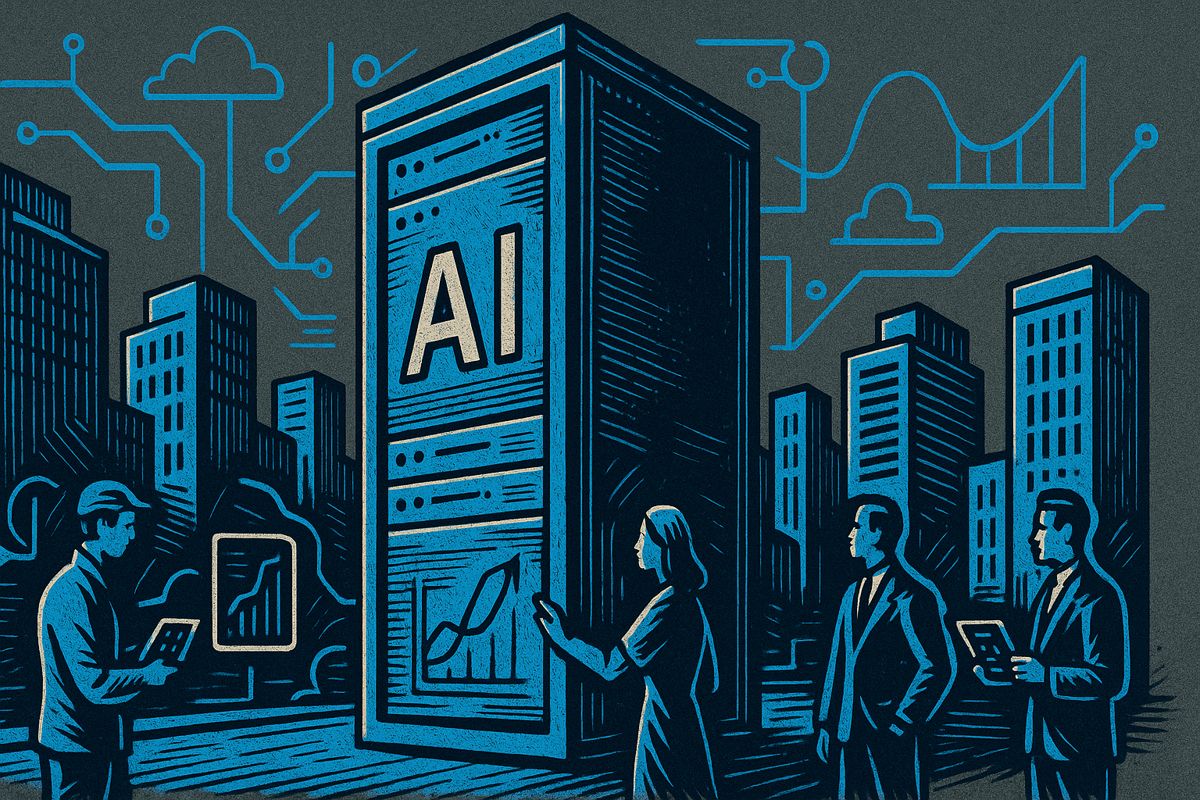
Most big companies still struggle to use AI on a large scale, with only about one percent making it work across their whole business by 2025. To succeed, companies follow four steps: try out AI in one area, redesign work around AI, expand to more teams using cloud tech, and set up strong rules and training. The biggest problems aren't technology but people, skills, and company culture. Winners are those who invest in teaching AI skills, set clear rules for AI, and make sure managers and teams work together. Companies that do this see faster growth and better results, leaving others behind.
What are the key steps and challenges for scaling AI across large enterprises in 2025?
Scaling AI in large enterprises involves a four-phase playbook: Absorb, Redesign, Scale, and Reinforce. Success hinges on redesigning workflows for AI, investing in governance and reskilling, overcoming cultural blockers, and leveraging cloud-native infrastructure to achieve enterprise-wide impact and higher growth.
In 2025, barely one percent of large enterprises have moved beyond pilot projects to achieve genuine, enterprise-wide AI maturity. The rest are stuck at the "proof-of-concept wall" - a place where individual teams deploy clever algorithms, yet nothing scales. A new wave of research shows why the leap from demo to deployment is so hard, and what resilient organizations are doing differently.
The Four-Phase Playbook Now in Use
-
Absorb
Initial AI tools land in a single workflow. Success is measured by basic accuracy, not business value. -
Redesign
Work is re-engineered around the AI, not the other way around. Airbus used this phase to redesign airplane-design simulations, training 10,000 engineers in AI tools and cutting simulation time by 40 percent**. -
Scale
Patterns that worked in one team are industrialized across divisions. The key enabler is cloud-native, elastic infrastructure**. -
Reinforce
Governance boards, automated model monitoring and continual reskilling lock gains in place.
McKinsey's 2025 "State of AI" report shows organizations that finish Phase 3 average 26 percent higher EBITDA growth, while laggards risk falling behind permanently.
The Three Hidden Blockers
| Barrier | Typical Symptom | Fast Fix |
|---|---|---|
| Middle-management resistance | Projects stall at local sign-off | Give managers shared OKRs tied to cross-unit AI KPIs |
| Skill fragmentation | Engineers know Python, business staff do not | Build hybrid networks: internal squads + external labs |
| Governance vacuum | No one owns model drift, bias or compliance | Install an AI governance platform and assign a named CRO |
BCG's 2025 survey found 70 percent of stalled AI programs cite "people, process and culture" - not technology - as the root cause.
Human-Centric Skills in Demand (2025 LinkedIn data)
| Skill Cluster | Annual Growth in Profiles 2022-2025 | Example Role Emergence |
|---|---|---|
| AI literacy | *80× * in the EU alone | Prompt engineer |
| Process optimization | 3× | Workflow architect |
| Conflict mitigation | 2.5× | Human-AI collaboration coach |
At Bank of Queensland Group, 84 percent of staff now report "significant or full support" for AI upskilling, leading to the fastest loan-approval time reduction in the bank's history.
Governance Tools Leaders Are Buying
Investment in AI governance platforms is forecast to hit $1.3 billion by 2026. The most adopted features:
- Explainability dashboards (used by 68 % of Fortune 500)
- Real-time bias detection (cut compliance incidents by up to 40 %)
- Model lifecycle libraries (ensure retired models don't silently affect decisions)
Practical Checklist for 2025-2026
- Establish a named AI risk owner at C-suite level
- Move critical workloads to cloud-first, GPU-ready stacks
- Create shared OKRs that force cross-team AI adoption
- Budget 5 percent of every AI project for continuous reskilling
- Select governance software that integrates with your existing ERP/ERM stack
The window for incremental change is closing. Organizations that treat AI not as a tool but as a redesign of work itself are the ones already pulling ahead - and widening the gap every quarter.
FAQ: Scaling Enterprise AI for Strategic Impact
What is the biggest barrier preventing organizations from moving beyond pilot AI projects?
Resistance from middle management and outdated organizational structures are the primary blockers cited in 2025 field studies. While 85 % of Fortune 500 firms have run at least one AI pilot, only 1 % have achieved full operational integration where AI actively drives measurable outcomes across functions. The gap is rarely technical; it stems from unclear governance roles, siloed data, and cultures that reward stability over experimentation.
Which workforce skills are becoming non-negotiable as AI scales?
AI literacy has entered the top-five list of U.S. job requirements for 2025, alongside adaptability, process optimization and innovative thinking. LinkedIn data shows professionals adding AI-related skills grew 80-fold in the EU between 2022 and 2023. Organizations that trained 10 000+ engineers (Airbus is a public case) cut design-simulation time 40 %, proving rapid upskilling translates directly to competitive speed.
How are leading companies structuring AI governance at the enterprise level?
By 2026, 80 % of large enterprises are projected to formalize internal AI governance policies that blend three layers:
- Regulatory compliance (EU AI Act, GDPR updates)
- Technical controls (bias audits, explainability dashboards)
- Continuous model monitoring for drift and reliability
Early adopters of integrated governance platforms report up to 40 % fewer compliance incidents and faster audit cycles.
What practical steps accelerate the leap from pilot to enterprise-wide AI?
- Pick one high-impact workflow and redesign it end-to-end rather than bolting AI onto legacy steps.
- Automate data pipelines first - poor data quality is cited in 70 % of stalled rollouts.
- Embed cross-functional pods: every AI squad now pairs data scientists with domain experts to avoid the "black-box" problem.
- Invest in cloud-native infrastructure to sidestep legacy compute limits; GPU/TPU capacity on demand lowers CapEx risk.
How should C-suite leaders prepare for continuous AI-driven change?
Shift from project-based transformation to change-resilience as a core competency. The 2025 BCG survey found 70 % of AI implementation issues are people and process related. Leaders who run quarterly "AI retrospectives" (similar to agile sprints) see 2× faster adoption curves because teams treat model updates, policy tweaks and retraining as normal operations, not one-off disruptions.
Sources: Harvard Business Review change-resilience guide, McKinsey 2025 State of AI, World Economic Forum Future of Jobs 2025.