
Akool Creates Hyper-Realistic AI Avatars for Video Calls with Real-Time Translation
Serge Bulaev
Explore Akool's AI avatars: hyper-realistic, multilingual, and identity-bending. Redefining digital communication & raising questions.
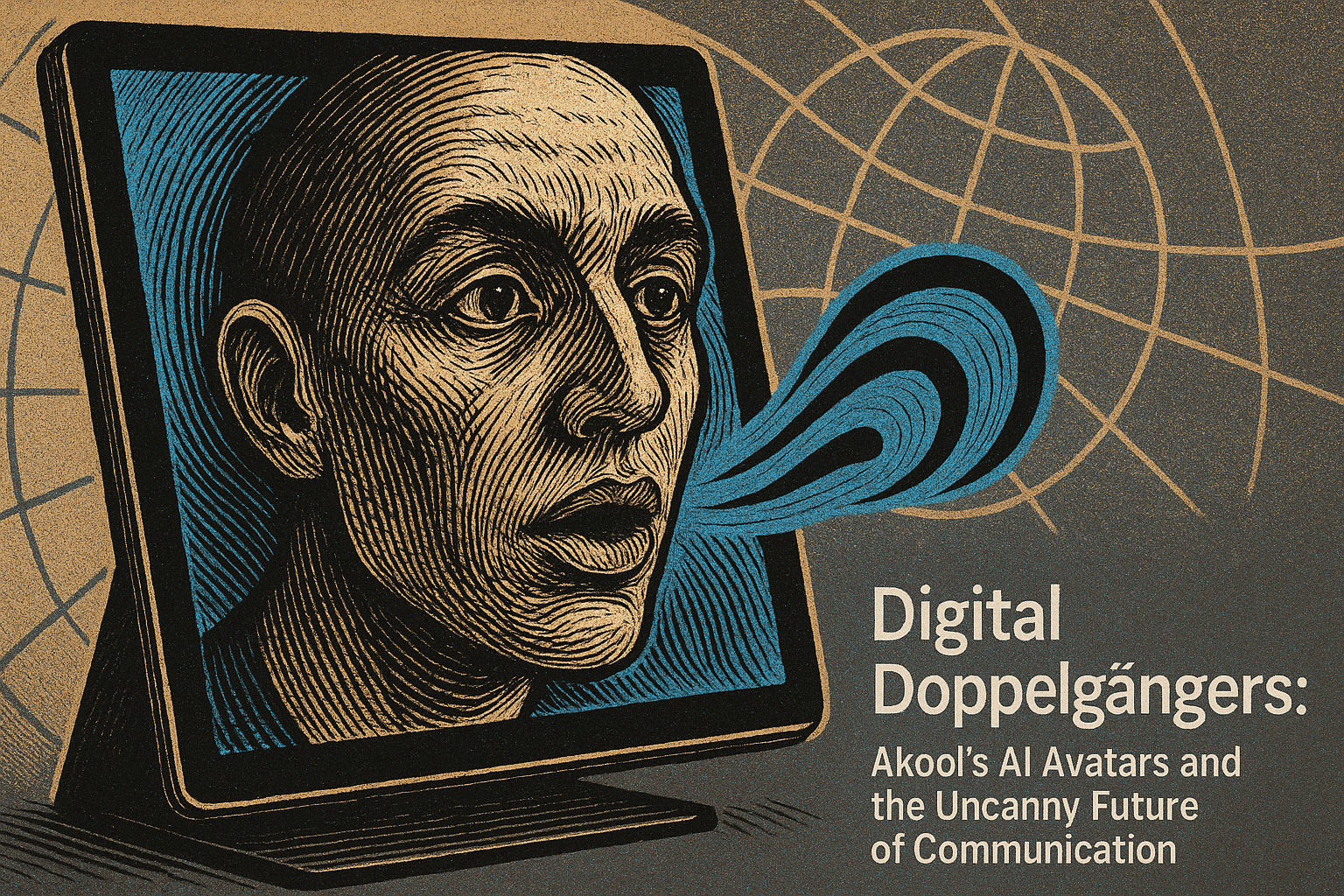
When Tech Gets Personal: Akool's Avatars and the Disappearing Barrier
Akool's AI crafts a digital twin that speaks and lip-syncs in 150+ languages, preserving your expressions. This tool erases language walls, letting you connect with anyone, anywhere, while still looking and sounding like yourself, transforming online talks into smooth, personal chats.
What is Akool's AI-powered avatar system?
Akool's AI-powered avatar system creates hyper-realistic digital versions of users, capable of real-time speech translation into over 150 languages with accurate lip-syncing. It mirrors micro-expressions and integrates seamlessly with platforms like Zoom, enabling users to present in foreign languages while maintaining their unique visual identity and voice. This technology eliminates language barriers in online communication.
I'll admit it, there's something electrifying about technology that feels just a little too real. Like, uncanny-valley, are-you-sure-that's-not-me kind of real. The other day, I watched a demo of Akool's AI-powered avatar system and found myself thrown back to the time I tried to fake a British accent on a team call. Disaster. My vowels were all over the map; I sounded like a tea kettle having an identity crisis. The thought lingered: what if an avatar could've saved me, delivering flawless English - or any language - with my own digital doppelgänger's face?
Akool is making that fantasy a reality, and the buzz in Silicon Valley is palpable. Imagine seeing your own digital twin on a video call, every blink and nervous smile duplicated with surgical accuracy. The technology doesn't just mimic you; it embodies you. Goosebumps, right? I wasn't the only one fascinated. My friend Suraya, a project manager sweating it out in monsoon-soaked Bangkok, once told me over bitter iced coffee that language barriers on calls left her feeling invisible. She'd rehearse every sentence, only to freeze when a joke landed flat or her sincerity vanished in the static. But now, with these avatars, she could present in flawless German or Japanese, her telltale eyebrow twitch perfectly preserved. Magic? Maybe. Or perhaps it's just machine learning flexing its muscles again.
Under the Hood: Akool's Toolkit and Tricks
So, how does Akool pull off this technological sleight of hand? It starts with hyper-realistic avatars that would give even Madame Tussauds a run for their money. The system translates your speech into over 150 languages, lip-syncing every syllable as if it were born speaking Tagalog or Finnish. On a whim, you can swap faces mid-call - one moment you, the next, a digital giraffe (why not?).
That's not all. Every twitch, grin, and frown is meticulously mirrored, right down to micro-expressions that betray a private joke or a flicker of doubt. Users can craft their avatars from simple selfies or video clips, even cloning their voice for that uncanny personal touch. Akool's integration with platforms like Zoom and Google Meet comes courtesy of a virtual camera, meaning you can slip into your avatar skin without learning any new tricks. I once worried this would be clunky; turns out, it's seamless. The companion suite includes an AI-powered video editor, image generator, and script-writing assistant - a regular Pandora's box for content creators, marketers, and anyone angling for attention in a crowded digital bazaar.
Don't just take my word. Early adopters have spun up everything from viral face-swapping pranks to multilingual product launches. The lip-syncing is so tight, colleagues have been fooled - or so they claim! The precision is, frankly, a little spooky.
Beyond the Wow: Implications, Emotions, and a Few Jitters
Let's pull back for a second - why does this matter? Well, 1.5 billion people globally are knee-deep in learning a second language. That's not a statistic plucked from thin air; it's a daily grind for millions. Akool's avatars can dissolve those linguistic walls in seconds, turning harrowing business calls into smooth sailing. It's not just a party trick; it's a lever for real economic and educational change. Marketers unleash ad campaigns without borders. Teachers reach classrooms scattered across time zones, in a tongue each student knows by heart. Suraya - and countless others - finally get to focus on ideas, not accents.
Then there's the psychological twist. Looking at your digital self, with every flaw and quirk faithfully rendered, is like peering into a carnival mirror that doesn't distort but reveals. It feels oddly intimate. At one point, I found myself unsettled, almost as if some part of my authenticity had been borrowed. Is that real connection, or just a simulation playing dress-up? The question lingers.
And yes, there's a whiff of mischief here. Privacy concerns, pranks, the perennial risk that someone will use your avatar to deliver a joke you'd never dare tell yourself. My pulse quickens at the thought. (Paranoid? Maybe. But you never know.)
The Edge of Now: Where Akool's Avatars Are Headed
This isn't just hype or a marketing fever dream. Akool's avatars are already transforming online learning, making what used to feel like a dreary slideshow into a one-on-one tutorial dripping with personality. Virtual event hosts can now riff in Mandarin, Spanish, or Yoruba, never missing a punchline or a pun. For a moment, you forget you're talking to pixels. It's all here - present, imperfect, and occasionally, a little uncanny.
If you want goosebumps, watch a demo for yourself. The official Akool site will either thrill you or leave you pondering identity theft in a high-tech age. Or both. The future, as always, sneaks up on you in subtle ways. Sometimes it speaks flawless Portuguese and grins with your own crooked smile.
Oops, almost forgot. That British accent? Never trying that again. I'll let the avatar handle it next time.